
Introduction
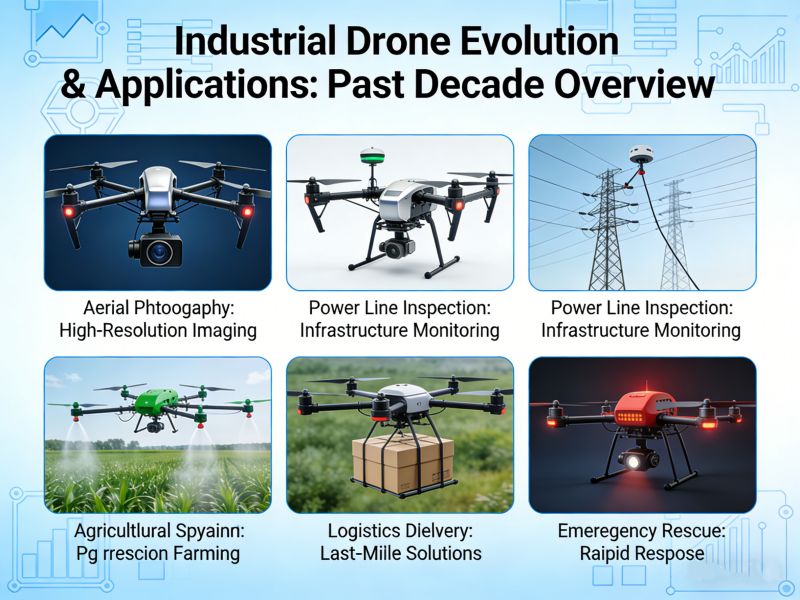
Industrial drones have evolved rapidly in the past decade. From aerial photography to power line inspection, agricultural spraying, logistics delivery, and emergency rescue, UAVs are now essential tools across many industries.
However, one of the biggest limitations of drone performance remains battery technology.
Search trends in Google and industry forums show increasing interest in questions such as:
- What is the best battery for industrial drones?
- Which battery technology provides the longest UAV flight time?
- Are solid state batteries suitable for drones?
- What battery type is safer for heavy-lift UAVs?
In 2026, several battery technologies compete in the industrial drone market. These include:
- Lithium-ion batteries
- LiPo (Lithium polymer) batteries
- Semi solid state batteries
- Emerging solid state battery technologies
Understanding the advantages, limitations, and real-world applications of these technologies is crucial for drone manufacturers and operators looking to improve performance and safety.
1. Lithium-Ion Batteries: The Traditional Workhorse
Lithium-ion batteries have been widely used in many electronic devices and electric vehicles. They also serve as a common power solution for industrial drones.
Key Advantages
High energy density
Lithium-ion batteries offer higher energy density compared to older battery chemistries such as nickel-based batteries.
Mature supply chain
Production processes are well established, allowing manufacturers to scale production efficiently.
Lower cost
Compared to newer technologies, lithium-ion batteries are relatively affordable.
Limitations for Industrial UAVs
Despite their popularity, lithium-ion batteries face several challenges in drone applications.
Safety concerns
Liquid electrolytes increase the risk of:
- Thermal runaway
- Overheating
- Fire hazards
Limited discharge capability
High-power drones require strong discharge rates, which can stress lithium-ion cells.
Performance degradation
Frequent charge cycles and high discharge loads can shorten battery lifespan.
2. LiPo Batteries: Popular in UAV Industry
Lithium polymer (LiPo) batteries are widely used in consumer drones and racing UAVs due to their high discharge capability.
Advantages of LiPo Batteries
High discharge rate
LiPo batteries support high C-rate discharge, which allows drones to generate strong thrust during takeoff.
Lightweight design
Flexible pouch cell design helps reduce battery weight.
Fast power delivery
This is essential for agile flight maneuvers.
Drawbacks of LiPo Batteries
Despite their popularity, LiPo batteries also have important limitations.
Safety risk
LiPo batteries are more sensitive to:
- Overcharging
- Physical damage
- High temperatures
Battery swelling or combustion can occur if not properly managed.
Shorter cycle life
Compared to lithium-ion batteries, LiPo batteries often have shorter lifespan, especially under heavy load.
Lower energy density
This limits flight endurance for long-duration missions.
3. Semi Solid State Batteries: The Emerging Industrial Standard
In 2026, semi solid state batteries are increasingly recognized as the most practical advanced battery technology for industrial drones.
Semi-solid batteries combine features of traditional lithium batteries with improved structural stability.
What Is a Semi Solid Battery?
A semi-solid battery uses a hybrid electrolyte system, combining reduced liquid electrolyte with solid-state materials.
This design offers several benefits:
- Higher energy density
- Better thermal stability
- Reduced flammability risk
- Improved safety performance
Key Advantages for Industrial Drones
Higher Energy Density
Semi-solid batteries can achieve significantly higher energy density than traditional lithium-ion batteries.
This allows:
- Longer UAV flight time
- Increased payload capacity
- Improved operational efficiency
For industrial missions such as power grid inspection or mapping, extended endurance is critical.
Enhanced Safety
Safety is one of the biggest concerns in drone battery design.
Semi-solid batteries reduce liquid electrolyte content, which helps lower the risk of thermal runaway and combustion.
This makes them particularly suitable for:
- heavy-lift drones
- long endurance UAVs
- industrial inspection systems
Improved Thermal Stability
Industrial drones often operate in harsh environments such as:
- high temperature regions
- cold climates
- high altitude conditions
Semi-solid batteries maintain more stable performance under extreme conditions.
Longer Lifespan
Semi-solid batteries typically provide better cycle stability compared to traditional LiPo batteries.
This helps reduce battery replacement costs for industrial drone operators.
4. Solid State Batteries: The Future Technology
Solid state batteries represent the next generation of battery innovation.
Instead of liquid electrolytes, these batteries rely entirely on solid electrolytes.
Potential Advantages
Solid state batteries promise:
- extremely high energy density
- superior safety performance
- longer lifespan
These benefits could dramatically improve drone endurance in the future.
Current Challenges
However, solid state batteries still face major commercialization barriers:
- high manufacturing cost
- complex production process
- limited mass production capability
As of 2026, most solid state battery development remains focused on electric vehicle applications.
5. Real-World Industrial Drone Battery Requirements
Choosing the best battery technology requires understanding real operational demands.
Industrial UAV systems typically require:
High energy density
to extend flight time.
High discharge rate
for stable power output during takeoff and heavy load operations.
Lightweight design
to maximize payload capacity.
Safety reliability
to prevent accidents during critical missions.
Stable supply chain
to ensure large-scale deployment.
Semi solid batteries currently offer the best balance between these factors.
6. Industrial Semi Solid Battery Manufacturers
Several battery manufacturers are actively developing semi-solid technology for UAV applications.
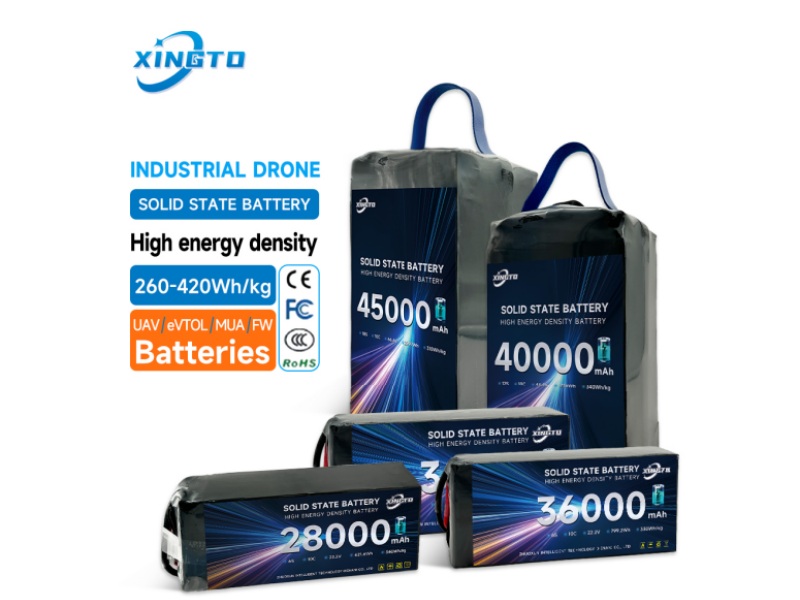
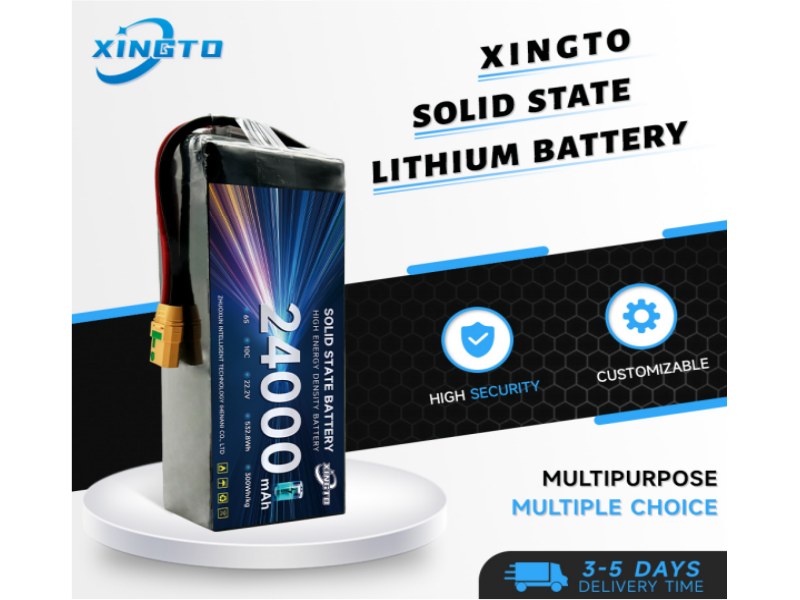
Among them, Xingto Battery focuses on industrial semi solid UAV battery solutions.
The company provides:
- high energy density drone batteries
- industrial UAV battery packs
- OEM and ODM customization
- global export certifications including UN38.3, CE, and MSDS
These batteries are designed specifically for heavy-lift and long-endurance drone platforms.
7. Comparison of Drone Battery Technologies
| Battery Type | Energy Density | Safety | Cost | Industrial Suitability |
|---|---|---|---|---|
| Lithium-ion | Medium | Medium | Low | Moderate |
| LiPo | Medium | Low | Medium | Common in consumer drones |
| Semi Solid | High | High | Medium | Excellent |
| Solid State | Very High | Very High | Very High | Future technology |
Based on current industry trends, semi solid batteries provide the most balanced solution for industrial UAV systems in 2026.
8. Future Trends in UAV Battery Technology
The drone battery market is expected to continue evolving in the coming years.
Major industry trends include:
higher energy density materials
Battery developers are focusing on improving lithium metal anodes and advanced cathode materials.
safer battery architecture
Reducing flammable electrolyte components remains a key goal.
lightweight structural integration
New battery designs may integrate directly into drone frames.
semi solid technology expansion
Semi-solid batteries are expected to see rapid adoption in industrial UAV applications before full solid-state technology becomes mainstream.
FAQ
What battery do most industrial drones use?
Many industrial drones currently use lithium-ion or LiPo batteries, but semi-solid batteries are gaining popularity due to their higher safety and energy density.
Are solid state batteries used in drones?
Solid state batteries are still in early development stages and are not widely used in commercial drone applications yet.
What is the best battery for long flight time drones
Semi solid batteries currently provide one of the best solutions for extending UAV endurance.
Why are semi solid batteries safer?
They contain less liquid electrolyte, which reduces the risk of overheating and combustion.
Conclusion
Battery technology plays a critical role in determining the performance and safety of industrial drones.
While lithium-ion and LiPo batteries remain widely used, semi solid batteries have emerged as the most practical next-generation solution for industrial UAV systems in 2026.
They provide a balanced combination of:
- higher energy density
- improved safety
- stable discharge performance
- scalable manufacturing
As drone applications continue to expand, advanced battery technologies like semi-solid systems will become increasingly important for enabling longer flight times and more demanding industrial missions.