
Introduction
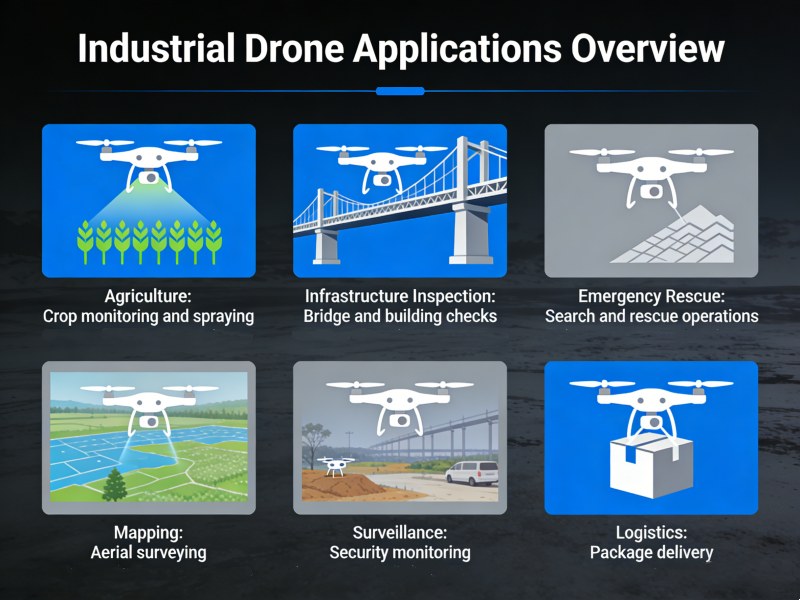
Unmanned Aerial Vehicles (UAVs), commonly known as drones, have become essential tools in modern industries. From agriculture and infrastructure inspection to emergency rescue, mapping, surveillance, and logistics, industrial drones are now performing tasks that were once difficult or dangerous for humans.
However, the performance of any UAV system largely depends on one critical component: the battery.
Many drone manufacturers and operators search for answers to questions like:
- What is the best high energy density battery for UAVs?
- How can drone batteries increase flight time?
- Are solid state batteries better for industrial drones?
- What battery technology offers the safest and most efficient power solution?
In this guide, we will explore the latest high energy density battery technologies for UAV applications in 2026, analyze their advantages and limitations, and explain why semi solid state batteries are becoming the preferred solution for industrial drones.
Why High Energy Density Matters for UAV Batteries
Energy density refers to the amount of energy stored per unit weight or volume of a battery. For drones, this metric is extremely important because every gram of weight directly impacts flight performance.
A high energy density battery allows drones to:
- Fly longer distances
- Carry heavier payloads
- Perform longer missions
- Improve overall operational efficiency
For industrial drone operators, higher energy density can significantly reduce operational costs by minimizing battery swaps and maximizing flight time.
Key Battery Requirements for Industrial UAVs
Before choosing a drone battery, it is important to understand the main technical requirements of industrial UAV applications.
1. Long Flight Time
Industrial missions such as power line inspection, mapping, or agricultural spraying often require extended flight duration. High energy density batteries allow drones to stay airborne longer without increasing weight.
2. High Discharge Rate
Industrial drones often carry heavy payloads such as:
- HD cameras
- LiDAR systems
- spraying equipment
- inspection sensors
These systems require batteries capable of delivering stable high current output.
3. Safety and Reliability
Drone batteries must operate safely under challenging conditions, including:
- high temperatures
- cold weather
- vibration during flight
- high altitude environments
Battery failures in mid-flight can cause equipment loss or safety hazards.
4. Lightweight Design
Reducing battery weight improves:
- drone maneuverability
- payload capacity
- flight efficiency
High energy density batteries store more power while maintaining a lightweight structure.
Types of High Energy Density Batteries for UAVs
Several battery technologies are currently used in drone systems. Each has different strengths and limitations.
Lithium-Ion Batteries
Lithium-ion batteries are one of the most widely used battery technologies in electronics and electric vehicles.
Advantages
- Relatively high energy density
- Mature production technology
- Lower manufacturing cost
Limitations
- Moderate discharge rate
- Thermal runaway risk under extreme conditions
- Performance degradation over time
Lithium-ion batteries are often used in long endurance fixed-wing drones, but they are not always ideal for heavy-lift multirotor UAVs.
Lithium Polymer (LiPo) Batteries
LiPo batteries are extremely popular in the consumer drone and racing drone market.
Advantages
- High discharge rate
- Lightweight pouch design
- Good power output
Limitations
- Lower energy density compared with advanced battery technologies
- Shorter cycle life
- Higher safety risk if damaged or improperly charged
LiPo batteries are still widely used in drones but are gradually being replaced in some industrial applications.
Semi Solid State Batteries
Semi solid state batteries are becoming a key breakthrough in UAV battery technology.
This technology uses a hybrid electrolyte structure combining solid-state materials and reduced liquid electrolyte, improving both performance and safety.
Advantages of Semi Solid Batteries
Higher Energy Density
Semi solid batteries can achieve significantly higher energy density than traditional LiPo batteries. This enables:
- longer UAV flight times
- increased payload capacity
- better mission efficiency
Improved Safety
By reducing liquid electrolyte content, semi solid batteries offer improved thermal stability and lower fire risk.
This makes them ideal for industrial drones operating in complex environments.
Better Thermal Stability
Semi solid batteries perform more reliably in extreme conditions such as:
- high temperature environments
- cold climate operations
- high altitude missions
Longer Cycle Life
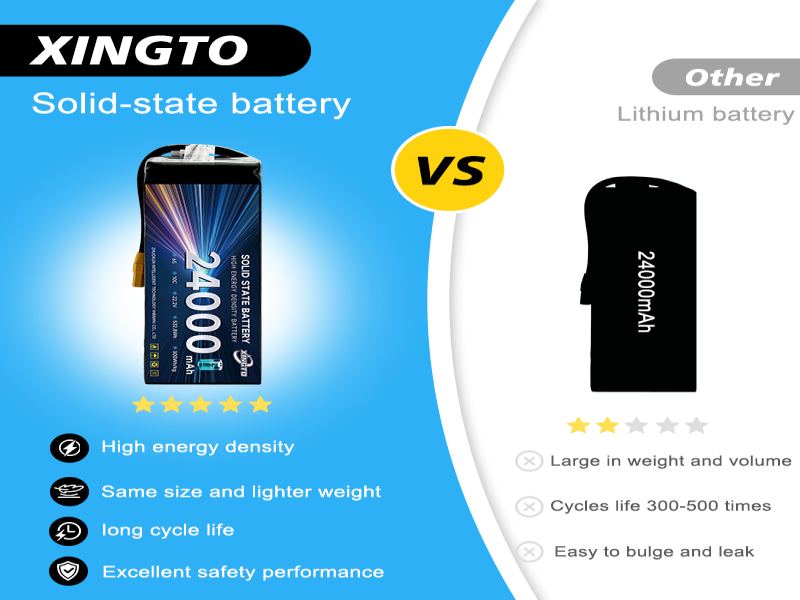
Compared with LiPo batteries, semi solid batteries generally provide longer service life, reducing replacement costs for drone operators.
Solid State Batteries
Solid state batteries are considered the ultimate future technology for high energy density energy storage.
Unlike traditional batteries, they use fully solid electrolytes instead of liquid electrolytes.
Potential Advantages
- Extremely high energy density
- Exceptional safety performance
- Long lifespan
- Reduced risk of thermal runaway
Current Challenges
Despite their advantages, solid state batteries are still in early development stages due to:
- high manufacturing cost
- complex production processes
- limited commercial availability
For now, most solid state battery development is focused on electric vehicles rather than drones.
Industrial UAV Battery Manufacturers
With increasing demand for high-performance drone batteries, several manufacturers are investing heavily in advanced battery technologies.
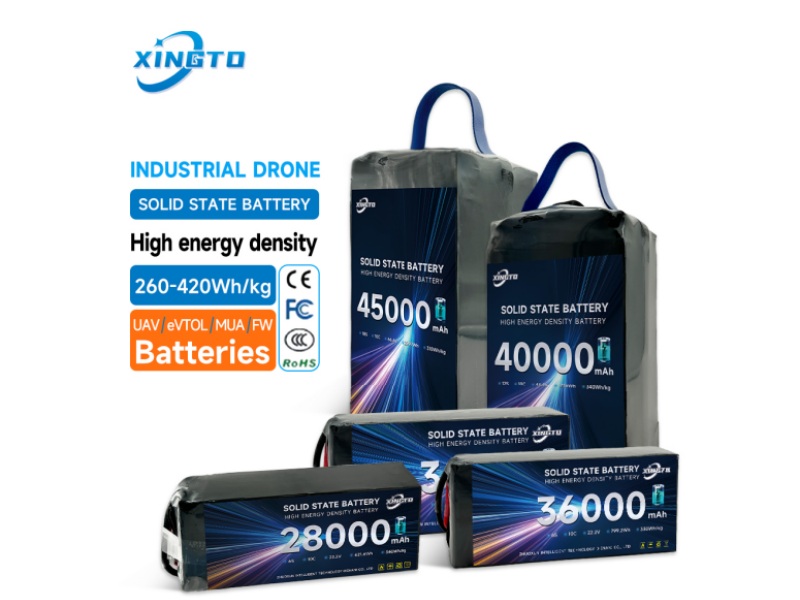
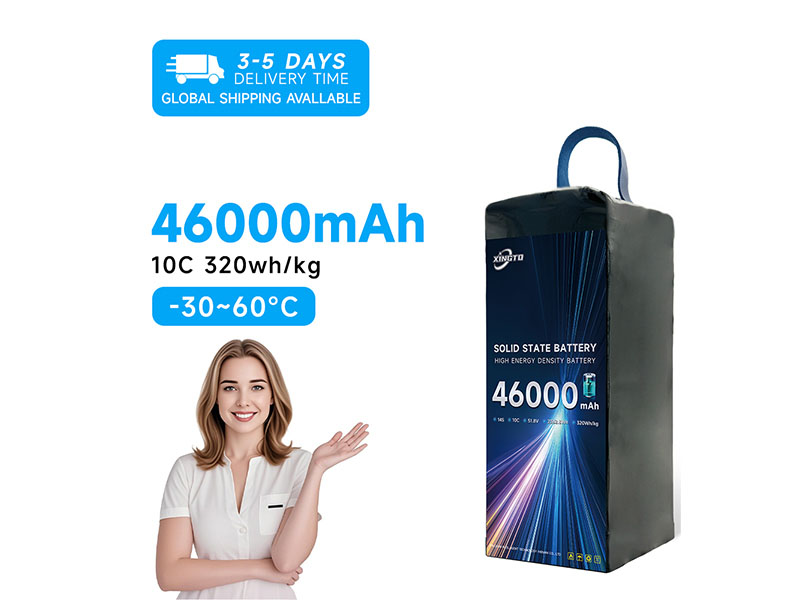
Among them, Xingto Battery focuses on industrial semi solid state UAV battery solutions designed specifically for demanding drone applications.
Xingto batteries offer:
- high energy density drone battery systems
- industrial UAV battery packs
- semi solid battery technology
- customized OEM and ODM battery solutions
These batteries are designed to support long-endurance industrial drones and heavy-lift UAV platforms.
Comparison of UAV Battery Technologie
| Battery Type | Energy Density | Safety | Cost | UAV Application |
|---|---|---|---|---|
| Lithium-ion | Medium | Medium | Low | Fixed-wing drones |
| LiPo | Medium | Low | Medium | Consumer drones |
| Semi Solid | High | High | Medium | Industrial drones |
| Solid State | Very High | Very High | Very High | Future UAV technology |
Currently, semi solid batteries provide the best balance between performance, safety, and cost for industrial UAV applications.
Future Trends in UAV Battery Technology
The UAV battery industry is evolving rapidly, and several trends are shaping the future of drone energy systems.
Higher Energy Density Materials
Battery manufacturers are exploring advanced materials such as:
- lithium metal anodes
- silicon-based anodes
- high-nickel cathodes
Structural Battery Integration
Future drones may integrate batteries directly into the airframe, reducing weight and increasing efficiency.
Semi Solid Battery Expansion
Semi solid technology is expected to become the dominant power solution for industrial UAVs over the next decade.
FAQ
What is the highest energy density battery for drones?
Solid state batteries theoretically offer the highest energy density, but semi solid batteries are currently the most practical high-energy solution available for industrial drones.
Why do industrial drones need high energy density batteries?
Higher energy density allows drones to fly longer while carrying heavier payloads, improving efficiency for industrial missions.
Are semi solid batteries better than LiPo batteries?
Yes. Semi solid batteries typically provide higher energy density, better safety performance, and longer lifespan than traditional LiPo batteries.
What battery technology will dominate drones in the future?
Semi solid batteries are expected to dominate industrial drone applications before fully solid-state batteries become commercially viable
Conclusion
As drone technology continues to advance, battery performance remains the key factor determining UAV flight capability.
High energy density batteries enable drones to fly longer, carry heavier payloads, and operate more safely in demanding environments.
While lithium-ion and LiPo batteries remain widely used today, semi solid state batteries are emerging as the most practical next-generation solution for industrial UAV applications.
With their improved energy density, enhanced safety, and stable performance, these batteries are becoming the preferred choice for professional drone manufacturers.
Companies like Xingto Battery, which specialize in industrial semi solid UAV battery technology, are helping push the boundaries of drone endurance and performance.
As the industry evolves, advanced battery innovations will continue to unlock new possibilities for UAV applications worldwide.