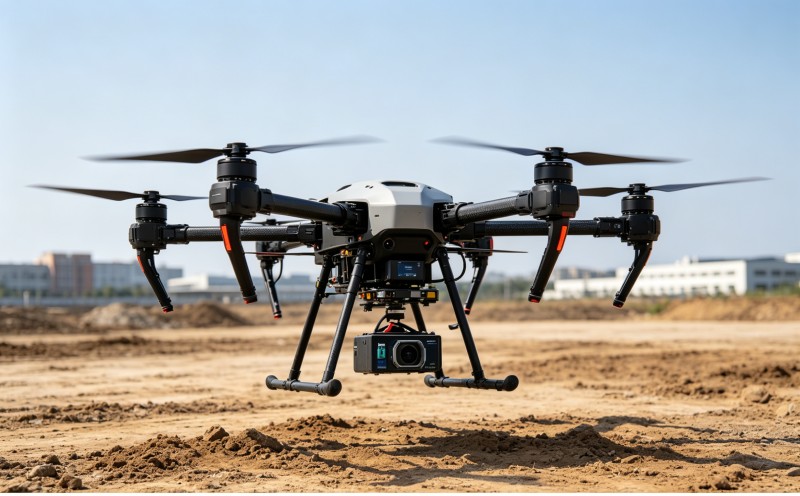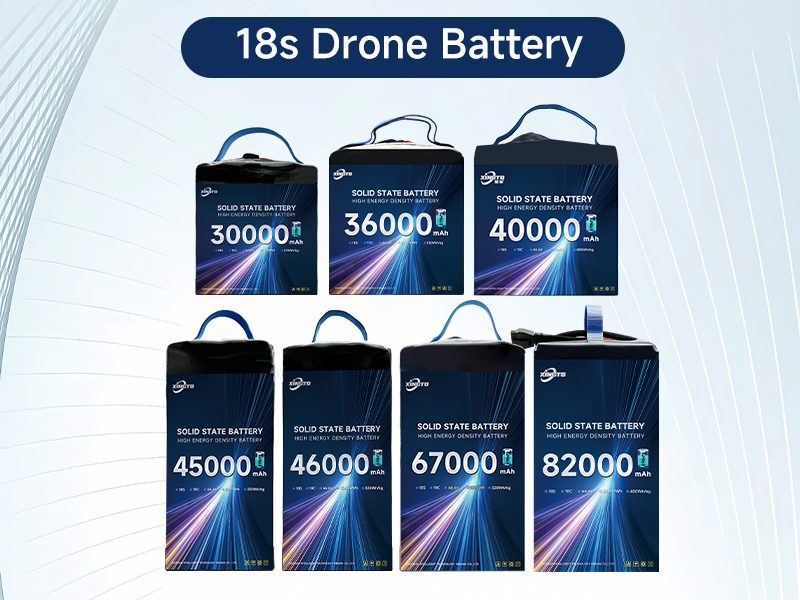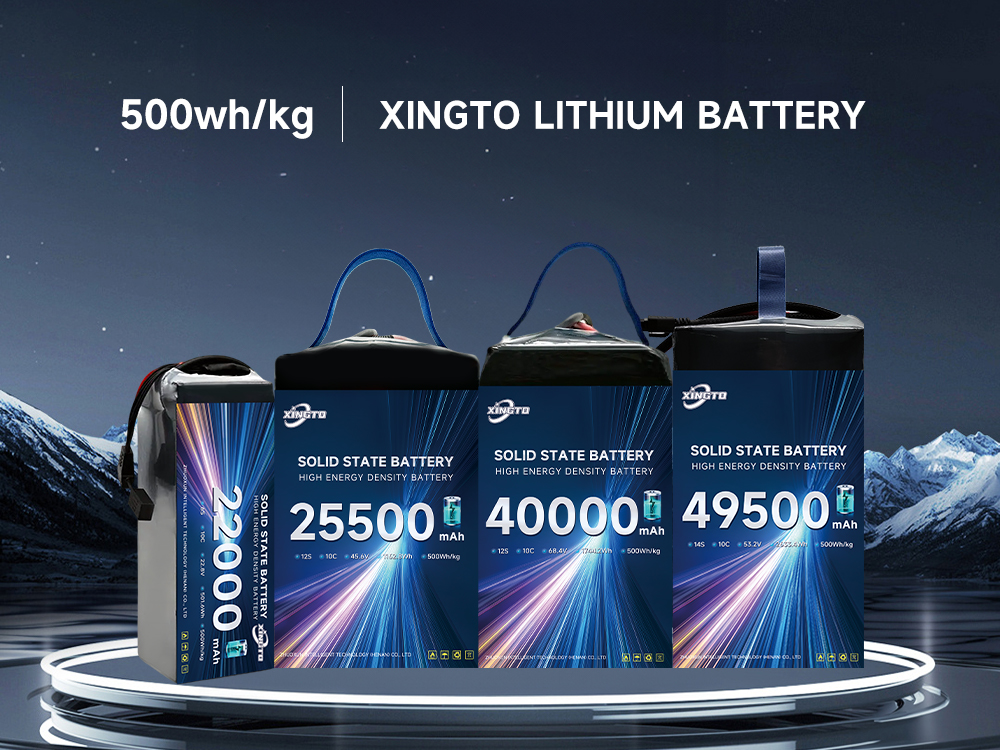

Choosing the right UAV battery is one of the most important decisions for drone performance and operational efficiency.
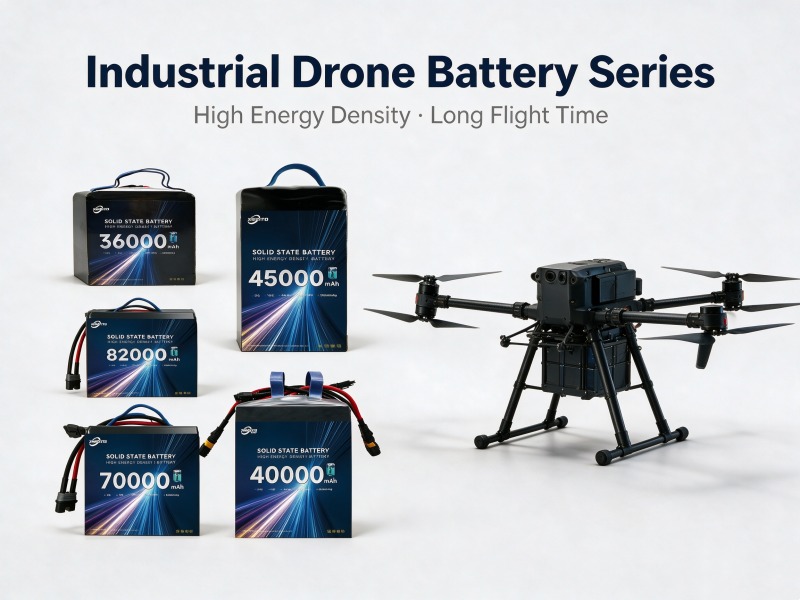
The battery affects:
- flight time
- payload capacity
- safety
- power output
- operational cost
Many drone operators ask:
- Which battery is best for industrial drones?
- Should I choose LiPo or lithium-ion?
- What battery gives the longest drone flight time?
This guide explains how to choose the best UAV battery based on your drone application and performance requirements.
Why UAV Battery Selection Matters
Different drones require different battery characteristics.
For example:
- racing drones need high discharge rates
- agricultural drones need heavy payload support
- mapping drones need long endurance
Using the wrong battery can cause:
- poor flight performance
- overheating
- reduced lifespan
- unstable operation
Key Factors When Choosing a Drone Battery
1. Battery Capacity (mAh / Ah)
Battery capacity determines how much energy the battery can store.
Higher capacity generally means:
- longer flight time
- increased endurance
However:
- larger capacity also increases weight
Industrial drones commonly use:
10000mAh–60000mAhdepending on payload and mission requirements.
2. Voltage (S Configuration)
Voltage directly affects motor performance and power output.
Common UAV battery configurations include:
| Configuration | Voltage |
|---|---|
| 6S | 22.2V |
| 12S | 44.4V |
| 14S | 51.8V |
| 18S | 66.6V |
| 24S | 88.8V |
| 28S | 103.6V |
Higher voltage systems improve:
- efficiency
- power delivery
- thermal performance
Industrial drones increasingly use 12S and higher voltage systems.
3. Energy Density
Energy density is one of the most important battery characteristics.
Higher energy density allows drones to:
- fly longer
- carry heavier payloads
- reduce total battery weight
This is especially important for:
- mapping drones
- delivery drones
- agricultural UAVs
4. Battery Weight
Battery weight directly impacts:
- endurance
- maneuverability
- payload capacity
Operators must balance:
- battery capacity
- total aircraft weight
5. Discharge Rate (C Rating)
High discharge rates are necessary for:
- heavy lift drones
- racing drones
- spraying UAVs
Low discharge capability may lead to:
- voltage sag
- unstable flight
- overheating
6. Battery Safety
Industrial UAV operations require high safety standards.
Battery safety factors include:
- thermal stability
- short circuit protection
- overcharge protection
Main Types of UAV Batteries
Lithium Polymer (LiPo) Batteries
LiPo batteries are widely used because they provide:
- high discharge rate
- lightweight performance
Advantages
- strong power output
- lightweight
- widely available
Disadvantages
- shorter lifespan
- swelling risk
- lower energy density
Lithium-Ion Batteries
Lithium-ion batteries focus more on endurance.
Advantages
- higher energy density
- longer lifespan
- stable performance
Disadvantages
- lower discharge rate
- slower power response
Semi Solid State Batteries (Recommended)
Semi solid batteries are becoming increasingly popular for industrial UAVs.
Advantages
- higher energy density
- improved safety
- better thermal stability
- longer cycle life
Ideal Applications
- agricultural drones
- mapping drones
- inspection UAVs
- logistics drones
Companies like Xingto Battery develop advanced semi solid UAV batteries for industrial applications requiring long endurance and high reliability.
Choosing the Right Battery for Different Drone Types
| Drone Type | Recommended Battery |
|---|---|
| Racing Drone | LiPo |
| Consumer Drone | LiPo / Lithium-ion |
| Mapping Drone | Lithium-ion / Semi Solid |
| Agricultural Drone | Semi Solid |
| Heavy Lift Drone | Semi Solid |
How to Calculate Expected Flight Time
Flight time depends on:
- battery capacity
- drone weight
- flight speed
- payload
Higher energy density batteries improve endurance significantly.
Common Mistakes When Choosing Drone Batteries
Choosing Based Only on Price
Cheap batteries often have:
- shorter lifespan
- lower safety
- unstable quality
Ignoring Compatibility
Always verify:
- voltage compatibility
- connector type
- charging protocol
Underestimating Safety Requirements
Industrial drones require professional-grade battery systems.
Google People Also Ask (FAQ)
Which battery is best for industrial drones?
Semi solid and high energy density lithium batteries are currently the best options.
What battery gives the longest drone flight time?
High energy density lithium-ion and semi solid batteries provide the longest endurance.
Is higher voltage better for drones?
Higher voltage systems generally improve efficiency and reduce heat.
Are semi solid batteries better than LiPo?
For industrial applications, yes. They offer better safety, endurance, and lifespan.
Conclusion + CTA
Choosing the right UAV battery requires balancing:
- endurance
- power output
- safety
- operational cost
For industrial drone applications, advanced semi solid battery technology provides superior performance and reliability.
Xingto Battery offers customized industrial UAV battery solutions designed for long endurance, high safety, and high energy density applications.If you have any questions, you can click on the online consultation and contact the Xingtuo Battery Technology Team for more professional answers!