
Introduction
Drone battery health directly affects:
- flight safety
- endurance
- power stability
- operational efficiency
For industrial UAV operators, battery failure during flight can cause:
- mission interruption
- equipment damage
- data loss
- serious safety risks
Many operators ask:
- How do I know if my drone battery is bad?
- What is the best way to test UAV battery health?
- How can I prevent battery failure before flight?
This guide explains how to properly test drone battery health, identify early warning signs, and improve long-term battery reliability.

Why Drone Battery Health Testing Matters
Drone batteries degrade gradually over time.
Even if a battery appears normal externally, internal problems may already exist.
Battery health testing helps operators detect:
- voltage instability
- capacity loss
- cell imbalance
- overheating risk
- internal resistance increase
Industrial drone fleets especially require regular battery diagnostics to maintain operational safety.
Main Signs of a Bad Drone Battery
Before performing detailed testing, operators should look for common warning signs.
1. Reduced Flight Time
One of the earliest signs of battery degradation is shorter endurance.
For example:
- flights that previously lasted 30 minutes may drop to 20 minutes
- battery percentage may fall rapidly under load
2. Battery Swelling
Swollen batteries are dangerous and should never be used.
Swelling usually indicates:
- gas buildup
- internal chemical instability
- overheating damage
3. Excessive Heat
A healthy battery should warm slightly during operation, but excessive heat may indicate:
- high internal resistance
- damaged cells
- over-discharge history
4. Voltage Drop During Flight
Unstable voltage can cause:
- sudden power loss
- emergency landing
- flight instability
Industrial UAVs carrying expensive sensors are especially vulnerable.
5. Charging Problems
A damaged battery may:
- charge unusually slowly
- fail to reach full voltage
- stop charging completely
Key Methods to Test Drone Battery Health
1. Visual Inspection
The first step is always a physical inspection.
Check for:
- swelling
- cracks
- damaged wires
- corrosion
- loose connectors
Never use physically damaged batteries.
2. Check Battery Voltage
Voltage testing is one of the simplest diagnostic methods.
Normal Voltage Range
Voltage should remain stable and balanced across all cells.
Large voltage differences between cells indicate imbalance or degradation.
3. Measure Internal Resistance
Internal resistance is one of the most important battery health indicators.
As batteries age:
- resistance increases
- efficiency decreases
- heat generation rises
Professional operators often use:
- smart chargers
- battery analyzers
- industrial battery testers
Why Internal Resistance Matters
High resistance causes:
- voltage sag
- lower power output
- overheating
- reduced flight time
Industrial UAVs requiring heavy current output are especially affected.
4. Perform Capacity Testing
Capacity testing measures how much energy the battery can still store.
For example:
A battery originally rated at:
22000mAhmay only retain:
17000mAhafter long-term use.
Lower retained capacity means reduced endurance.
5. Monitor Battery Temperature
Healthy batteries maintain relatively stable temperature during operation.
Abnormal heat may indicate:
- excessive current draw
- internal damage
- poor thermal management
6. Analyze Flight Performance
Battery health problems often appear during real flight conditions.
Common symptoms include:
- rapid voltage drop
- unstable hover
- reduced endurance
- unexpected landing warnings
How Often Should You Test Drone Batteries?
Consumer Drones
Basic testing every:
1–2 monthsis usually sufficient.
Industrial UAV Fleets
Industrial drone operators should perform inspections:
- before every mission
- after heavy use
- during scheduled maintenance cycles
Comprehensive diagnostics are recommended every:
30–60 daysBattery Health Testing for Agricultural Drones
Agricultural drones place extremely high stress on batteries due to:
- heavy payload
- repeated takeoff cycles
- outdoor heat exposure
Recommended practices:
- monitor battery temperature carefully
- test voltage consistency regularly
- replace degraded batteries early
Smart Battery Management Systems (BMS)
Modern industrial UAV batteries often include advanced BMS systems.
These systems monitor:
- voltage
- temperature
- charge cycles
- discharge rate
- cell balance
Advanced BMS technology improves:
- safety
- reliability
- maintenance efficiency
Why Semi Solid Batteries Improve Battery Health Stability
Semi solid battery technology offers several advantages over traditional LiPo systems.
Benefits include:
- improved thermal stability
- lower swelling risk
- reduced degradation
- better cycle consistency
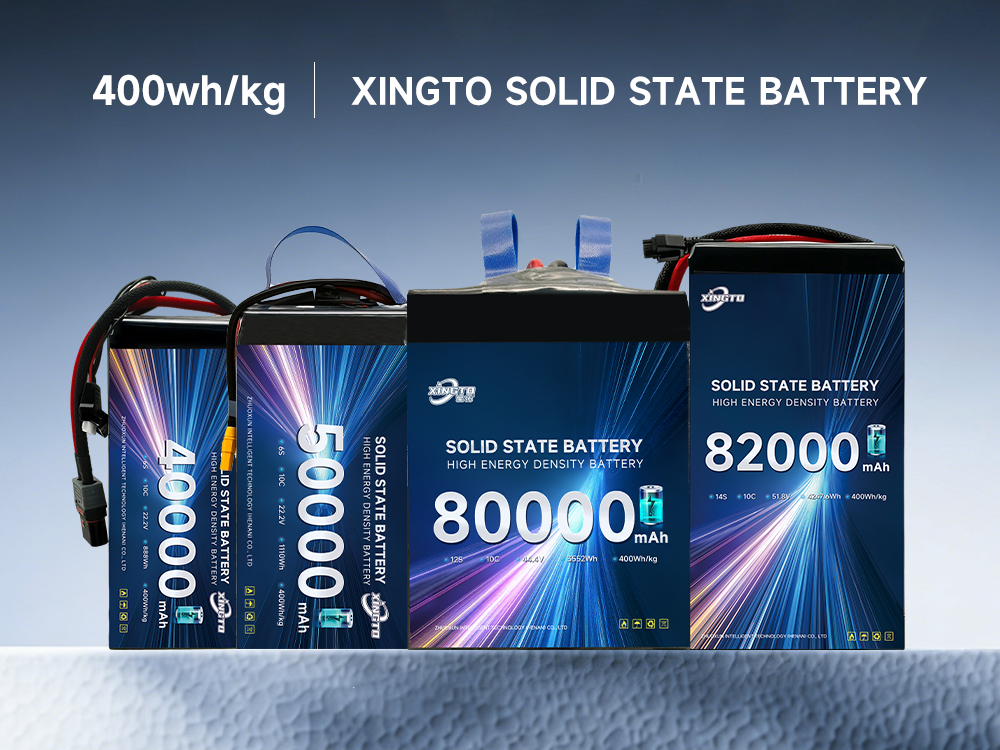
Companies like Xingto Battery develop advanced semi solid UAV battery systems optimized for industrial drone applications requiring long endurance and high reliability.
Common Drone Battery Testing Mistakes
Mistake 1: Ignoring Small Voltage Differences
Minor imbalance may indicate early degradation.
Mistake 2: Using Swollen Batteries
Swollen batteries should never be reused.
Mistake 3: Testing Batteries While Hot
Allow batteries to cool before testing.
Mistake 4: Ignoring Internal Resistance
Voltage alone does not reveal complete battery health.
Google People Also Ask (FAQ)
How do I know if my drone battery is bad?
Common signs include swelling, reduced flight time, excessive heat, and voltage instability.
What is normal internal resistance for drone batteries?
Normal values vary depending on battery size and chemistry, but lower resistance generally indicates better health.
Can drone batteries recover after degradation?
Minor imbalance may be corrected, but serious degradation is usually permanent.
How often should industrial UAV batteries be tested?
Professional operators should inspect batteries before every mission and perform deeper diagnostics regularly.
Conclusion + CTA
Regular battery health testing is essential for:
- flight safety
- stable performance
- industrial reliability
- reduced operational cost
Industrial UAV operators should implement professional battery diagnostic procedures and use advanced battery systems designed for long-term stability.
Xingto Battery provides high energy density semi solid UAV battery solutions with advanced safety, thermal stability, and industrial-grade reliability.