
Introduction
Agricultural drones are transforming modern farming by enabling efficient crop spraying, seeding, fertilization, and monitoring. As drone usage in agriculture grows, one key factor determines operational success:
👉 Battery performance
Farmers and drone operators often ask:
- What is the best battery for agricultural drones?
- How can I increase spraying drone flight time?
- Which battery is best for heavy payload UAVs?
In this guide, we break down the best battery options for agricultural drones, compare technologies, and provide practical recommendations for maximizing efficiency.
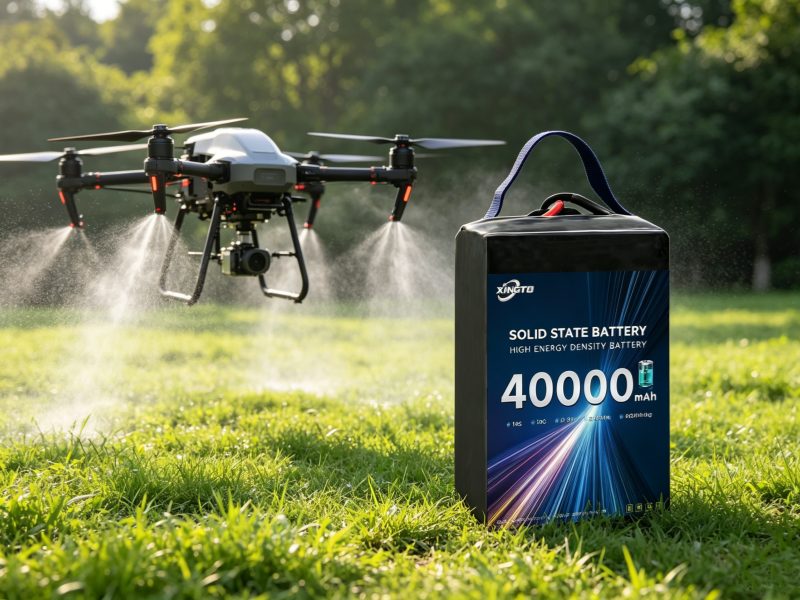
Why Battery Choice Matters for Agricultural Drones
Agricultural drones operate under demanding conditions:
- Heavy payload (liquid tanks 10L–50L+)
- Continuous flight cycles
- Large field coverage
- Harsh outdoor environments
Because of this, batteries must provide:
- high energy density
- strong discharge performance
- long cycle life
- high safety standards
Choosing the wrong battery can lead to:
- shorter flight time
- frequent battery replacement
- operational downtime
Key Requirements for Agricultural Drone Batteries
1. High Energy Density
Spraying drones need long flight time to cover large farmland areas efficiently.
Higher energy density allows:
- longer spraying missions
- fewer battery swaps
- improved productivity
2. High Discharge Rate
During takeoff and spraying operations, drones require strong power output.
Insufficient discharge capability can cause:
- unstable flight
- reduced efficiency
3. Long Cycle Life
Agricultural drones are used daily, often requiring multiple charging cycles per day.
A long-lasting battery reduces:
- replacement cost
- downtime
4. Safety & Reliability
Working in outdoor environments increases risks.
Batteries must handle:
- high temperatures
- vibrations
- continuous operation
Types of Batteries for Agricultural Drones
Lithium Polymer (LiPo) Batteries
LiPo batteries are widely used due to their high discharge capability.
Pros
- high power output
- lightweight
- widely available
Cons
- lower energy density
- shorter lifespan
- higher safety risks
👉 Suitable for small or mid-size spraying drones.
Lithium-Ion Batteries
Lithium-ion batteries offer better energy density than LiPo.
Pros
- longer flight time
- better efficiency
- longer cycle life
Cons
- lower discharge rate
- less suitable for heavy lift drones
Semi Solid State Batteries (Recommended)
Semi solid batteries are becoming the preferred solution for industrial agricultural drones.
Advantages
- higher energy density
- improved safety
- better temperature performance
- longer lifespan
👉 Ideal for:
- large spraying drones
- heavy payload UAVs
- long endurance missions
Why Semi Solid Batteries Are Best for Spraying UAVs
Agricultural drones require a balance between:
- endurance
- safety
- power output
Semi solid batteries deliver this balance by:
- reducing liquid electrolyte risks
- increasing energy storage capacity
- improving thermal stability
Real Industrial Solution
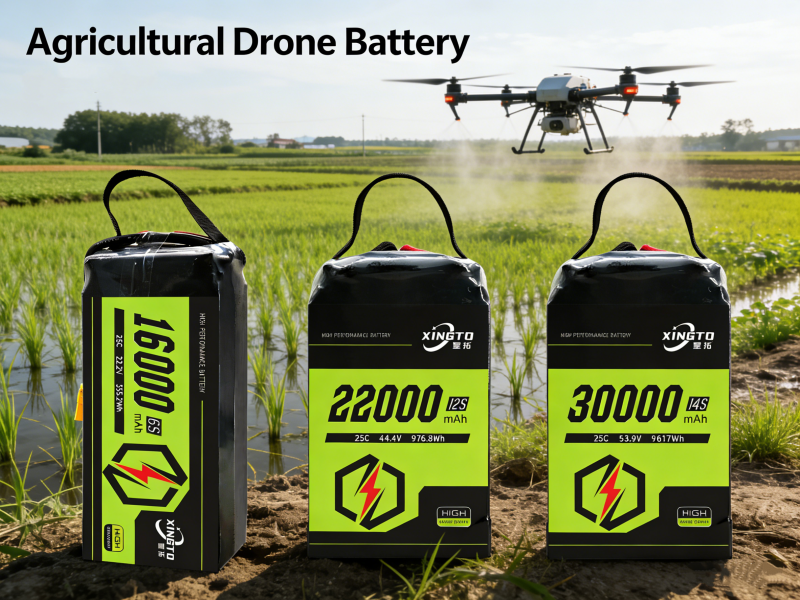
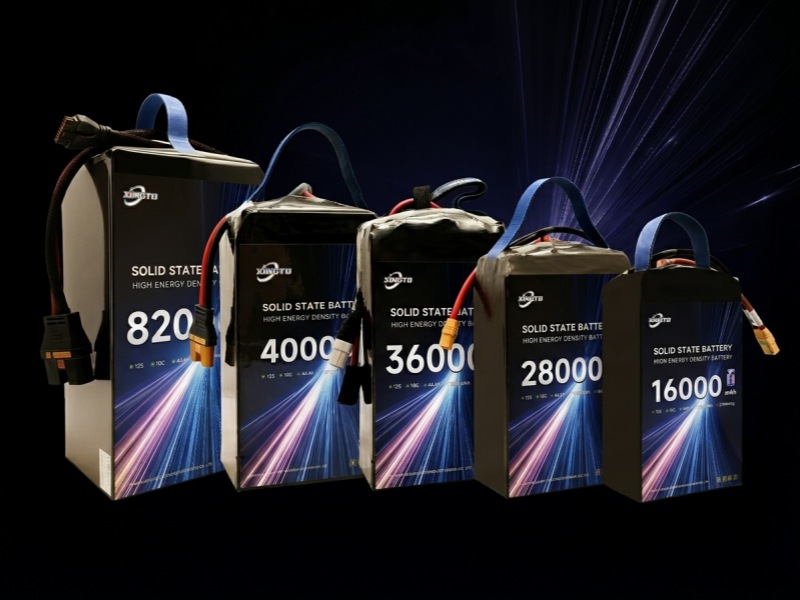
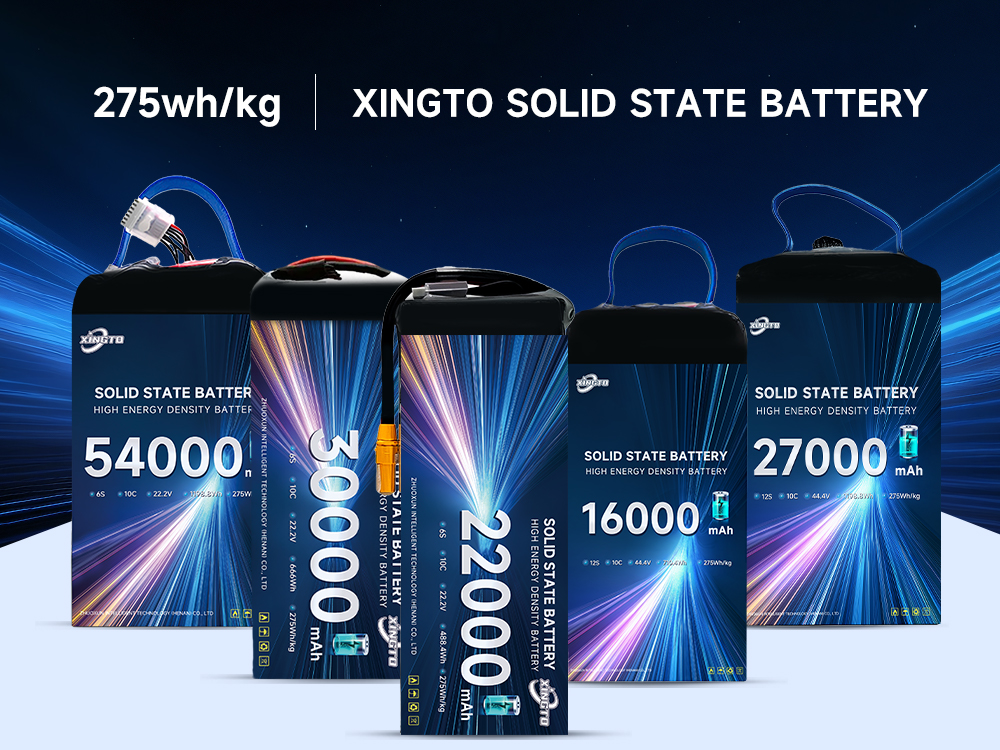
Companies like Xingto Battery provide semi solid state UAV batteries designed specifically for agricultural drones.
Their solutions offer:
- high capacity battery packs
- long endurance flight support
- OEM/ODM customization
- certifications (UN38.3, CE, MSDS)
These batteries are widely used in:
- crop spraying drones
- fertilizer distribution UAVs
- precision agriculture systems
How to Choose the Right Battery for Your Agricultural Drone
Consider the following:
- payload weight
- required flight time
- working environment
- budget
👉 For large-scale operations, investing in high energy density semi solid batteries is often the best long-term choice.
Google People Also Ask (FAQ)
What battery is best for spraying drones?
Semi solid or lithium-ion batteries are best for long endurance agricultural drones.
How long can agricultural drones fly?
Typically 15–40 minutes depending on payload and battery capacity.
Why do spraying drones need high capacity batteries?
Because they carry liquid payloads and must cover large areas efficiently.
Conclusion + CTA
Agricultural drones require reliable and high-performance battery systems to maximize productivity.
While LiPo and lithium-ion batteries are still widely used, semi solid battery technology offers the best balance of safety, endurance, and performance.
👉 For advanced agricultural UAV battery solutions, consider Xingto Battery, which specializes in high energy density semi solid drone batteries.