
Introduction
Battery technology is one of the most important factors driving innovation in the drone industry. As drones become more capable and widely used in industrial applications, the need for longer flight time, improved safety, and higher energy density continues to grow.
One technology that has attracted enormous attention in recent years is the solid state battery.
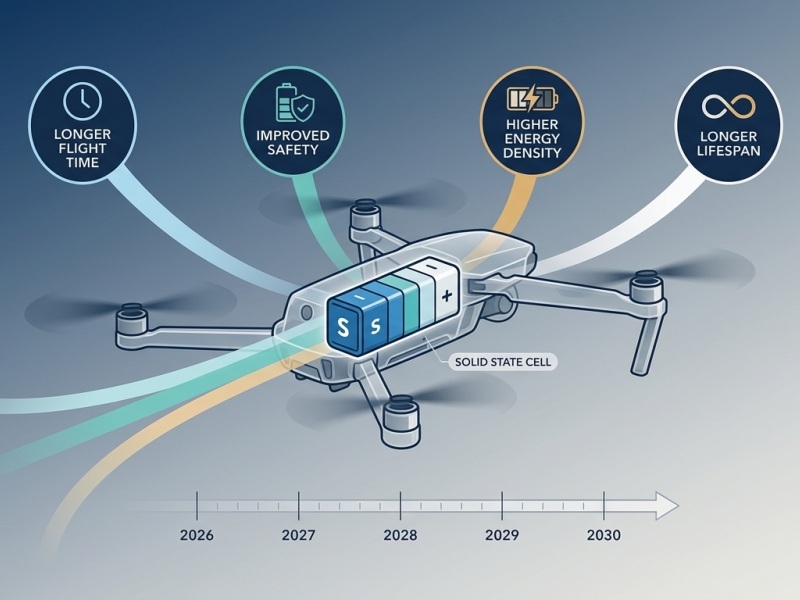
Solid state batteries promise to revolutionize energy storage by offering:
- extremely high energy density
- improved safety performance
- longer battery lifespan
In this article, we explore the future of solid state batteries in the drone industry, including technological challenges, commercialization timelines, and emerging alternatives such as semi solid battery technology.
What Is a Solid State Battery?
A solid state battery is a type of battery that uses a solid electrolyte instead of the liquid electrolyte used in traditional lithium batteries.
This structural difference provides several potential advantages.
Advantages of Solid State Batteries
Higher Energy Density
Solid state batteries can theoretically achieve much higher energy density than conventional lithium-ion batteries.
This could allow drones to:
- fly longer distances
- carry heavier payloads
- complete longer missions
Improved Safety
Liquid electrolytes used in traditional batteries are flammable.
Solid state batteries eliminate this risk by replacing liquid electrolytes with solid materials, significantly improving safety.
Longer Battery Lifespan
Solid state batteries are expected to have longer cycle life, reducing battery degradation over time.
Challenges of Solid State Batteries
Despite their advantages, solid state batteries still face several major challenges.
High manufacturing cost
Producing solid electrolytes at scale remains expensive.
Complex manufacturing process
Large-scale production requires advanced manufacturing technology.
Limited commercial availability
Most solid state batteries are still in research or early testing stages.
Because of these challenges, widespread commercial use may still take several years.
Semi Solid Batteries: The Bridge Technology
While fully solid state batteries are still under development, semi solid battery technology is already entering the market.
Semi solid batteries provide many advantages of solid state batteries while remaining easier to manufacture.
These batteries offer:
- higher energy density than lithium-ion batteries
- improved safety performance
- scalable manufacturing processes
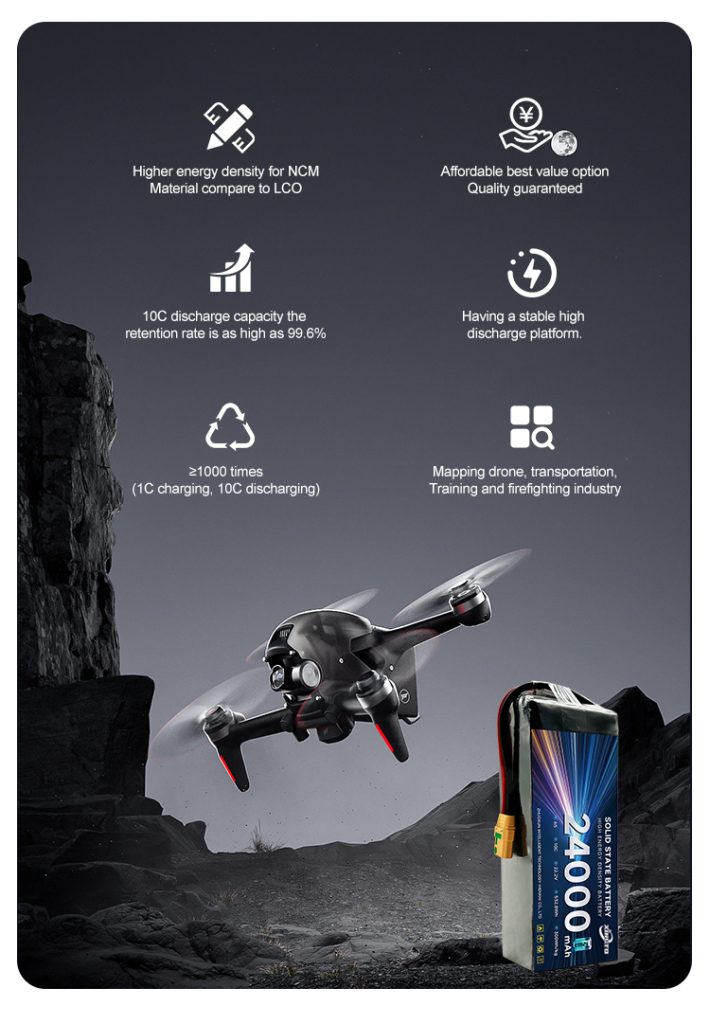
This makes semi solid batteries particularly suitable for industrial UAV applications.
Industrial UAV Battery Development
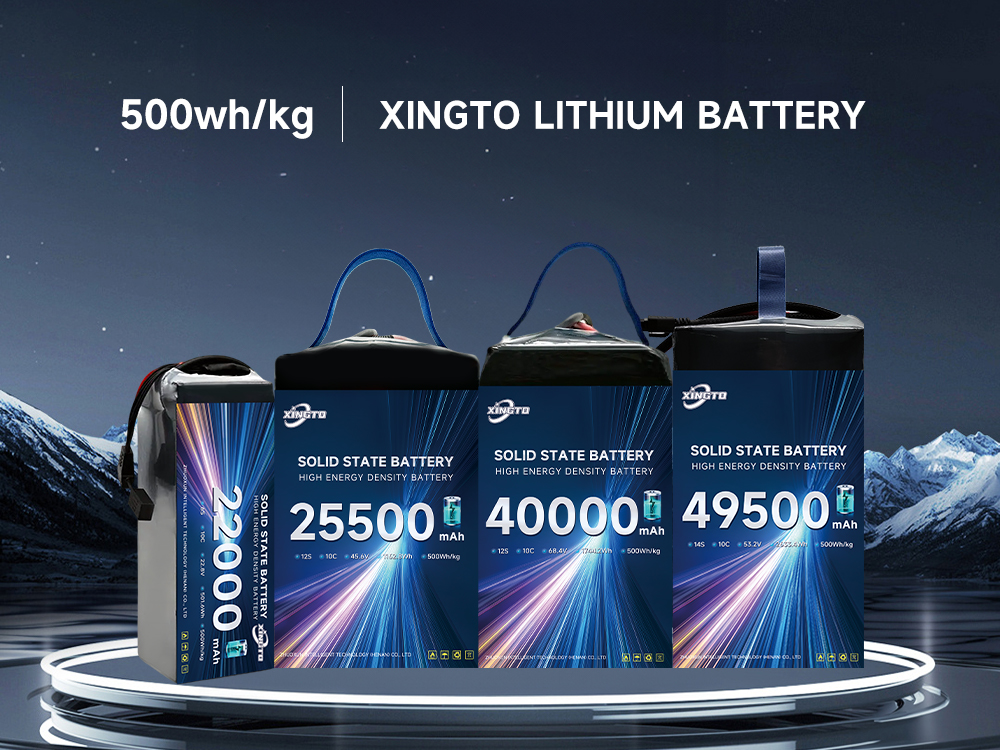
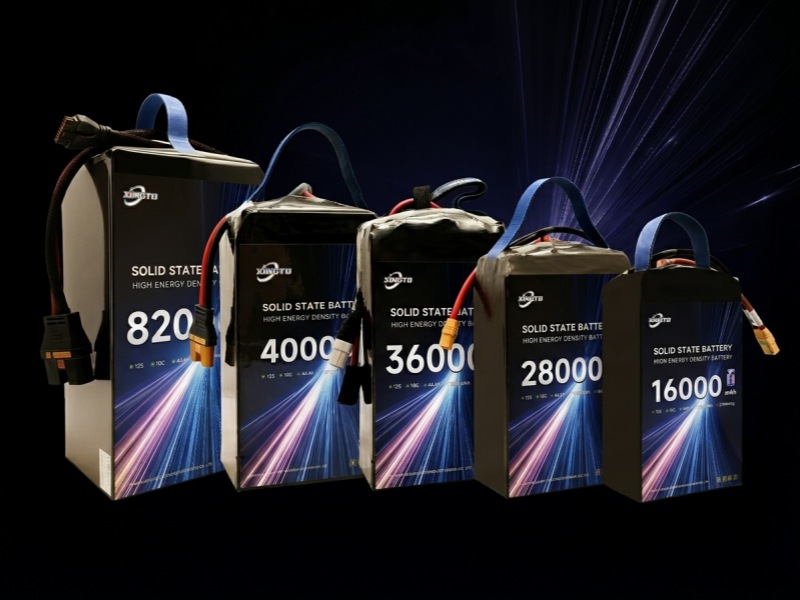
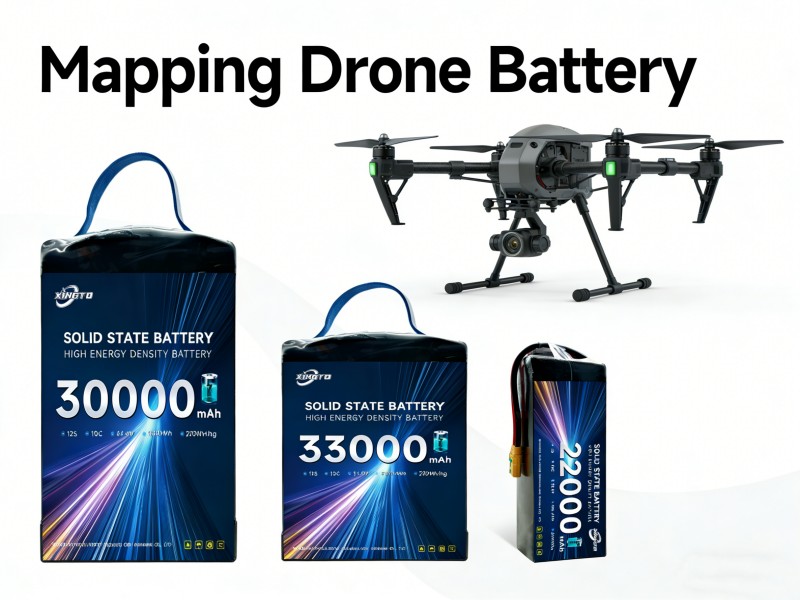
Companies such as Xingto Battery are actively developing semi solid state battery systems for industrial drones.
These batteries are designed to support:
- long-endurance UAV missions
- heavy payload drone platforms
- industrial inspection drones
By combining advanced battery materials with optimized battery pack design, manufacturers can significantly improve UAV performance.
Future Outlook
Over the next decade, the drone industry will likely experience several major battery technology developments.
2026–2028
Semi solid batteries become increasingly common in industrial drone systems.
2028–2030
Early solid state battery adoption begins in specialized UAV platforms.
Beyond 2030
Fully solid state batteries may become widely adopted across multiple industries.
Conclusion
Solid state batteries represent one of the most exciting innovations in energy storage technology.
Although large-scale commercial adoption may still take time, advancements in semi solid battery technology are already improving UAV performance today.
As battery manufacturers continue to innovate, drones will benefit from longer flight times, higher efficiency, and safer power systems.