
Introduction
Industrial drones are now widely used in sectors such as agriculture, infrastructure inspection, aerial mapping, logistics, surveillance, and emergency response. As drone technology evolves, battery performance has become one of the most critical factors determining UAV efficiency.
Many drone operators and manufacturers frequently search for answers to questions such as:
- What is the best drone battery for industrial UAVs?
- How can I increase drone flight time?
- What battery technology offers the highest energy density?
- Which battery type is safest for industrial drones?
Choosing the right drone battery is essential because it directly affects flight time, payload capacity, operational safety, and overall mission efficiency.
In this guide, we will explore how to select the best drone battery for industrial UAVs and analyze the latest battery technologies used in professional drone systems.
Why Drone Battery Selection Is Important
A drone battery is not simply a power source—it is the core component that determines the drone’s performance and operational reliability.
A high-quality UAV battery can provide:
- longer flight endurance
- stable power output
- improved safety during operation
- lower long-term maintenance costs
On the other hand, using an unsuitable battery may lead to:
- reduced flight time
- unstable power supply
- overheating or safety risks
- frequent battery replacement
For industrial UAV operations, selecting the right battery technology is essential.
Key Factors When Choosing a Drone Battery
1. Energy Density
Energy density refers to the amount of energy stored in a battery relative to its weight.
Higher energy density allows drones to:
- fly longer distances
- stay airborne for longer missions
- carry heavier payloads
For industrial applications such as power line inspection or aerial mapping, high energy density batteries are critical.
2. Battery Weight
Drone performance is highly sensitive to weight.
A lighter battery improves:
- flight efficiency
- maneuverability
- payload capacity
High energy density batteries help reduce overall battery weight while maintaining long endurance.
3. Discharge Rate
Industrial drones require batteries capable of delivering high current output.
Heavy payload drones must generate strong thrust during takeoff and maintain stable power during flight.
Batteries with insufficient discharge capability may cause:
- unstable flight performance
- reduced motor efficiency
4. Safety and Thermal Stability
Drone batteries must operate safely in challenging environments.
Industrial UAVs often work in conditions such as:
- high temperature environments
- cold climates
- high altitude locations
A reliable battery should have strong thermal stability and safety protection mechanisms.
5. Battery Lifespan
Industrial drone operations involve frequent charge cycles.
Choosing a battery with long cycle life reduces operational costs and improves reliability.
Types of Drone Batteries
Several battery technologies are currently used in UAV systems.
Lithium Polymer (LiPo) Batteries
LiPo batteries are widely used in consumer drones and racing UAVs.
Advantages
- high discharge rate
- lightweight design
- strong power output
Limitations
- lower energy density
- shorter lifespan
- higher safety risk if damaged
While LiPo batteries remain popular, they may not be ideal for long-endurance industrial drones.
Lithium-Ion Batteries
Lithium-ion batteries are often used in long endurance UAV systems.
Advantages
- higher energy density than LiPo batteries
- longer cycle life
- better energy efficiency
Limitations
- lower discharge rate compared with LiPo batteries
- potential safety concerns with liquid electrolytes
Semi Solid State Batteries
Semi solid batteries are emerging as one of the most promising technologies for industrial UAV applications.
These batteries use a hybrid electrolyte system combining solid materials with reduced liquid electrolyte.
Advantages
- higher energy density
- improved safety
- better temperature performance
- longer battery lifespan
Because of these benefits, semi solid batteries are becoming increasingly popular in industrial drone systems requiring long endurance and heavy payload capacity.
Industrial Drone Battery Manufacturers
Several manufacturers are actively developing high-performance UAV batteries.
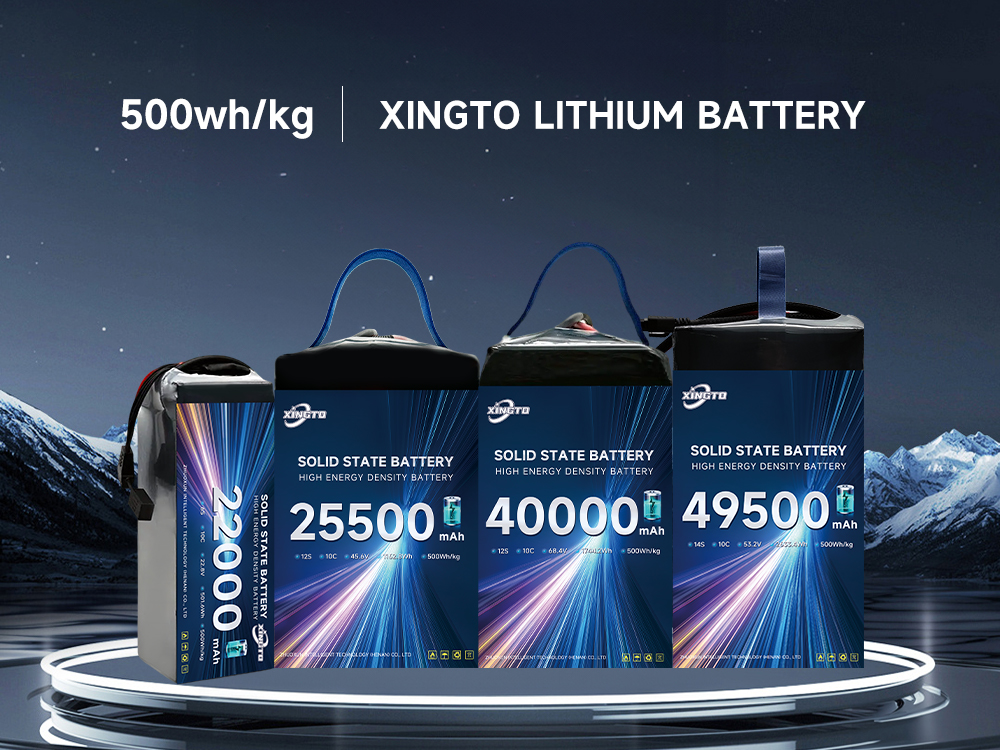
Among them, Xingto Battery focuses on advanced semi solid state batteries designed for industrial UAV platforms.
Their battery systems offer:
- high energy density drone batteries
- industrial UAV battery packs
- customized OEM and ODM solutions
- international certifications including UN38.3, CE, and MSDS
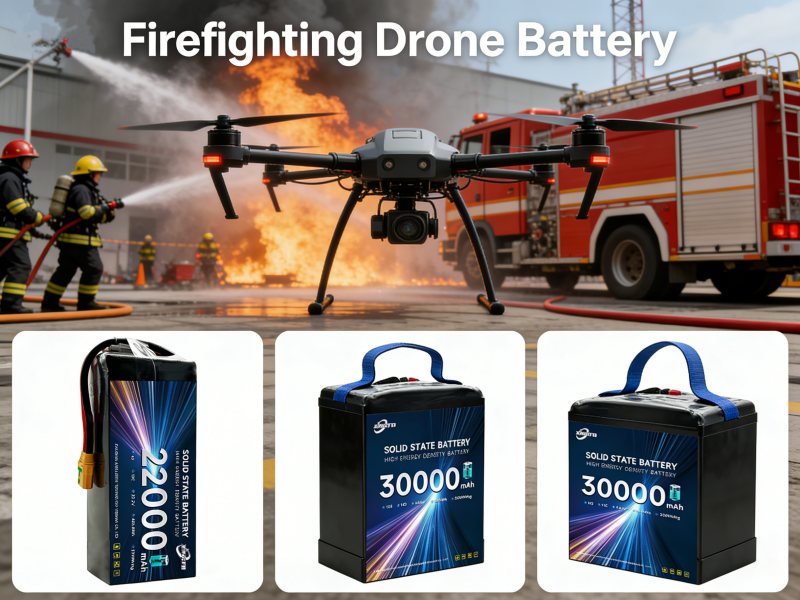
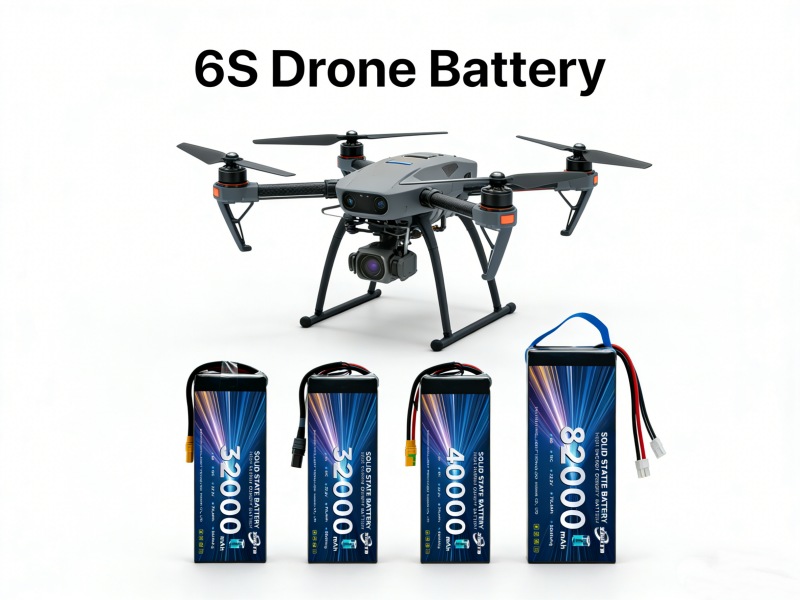
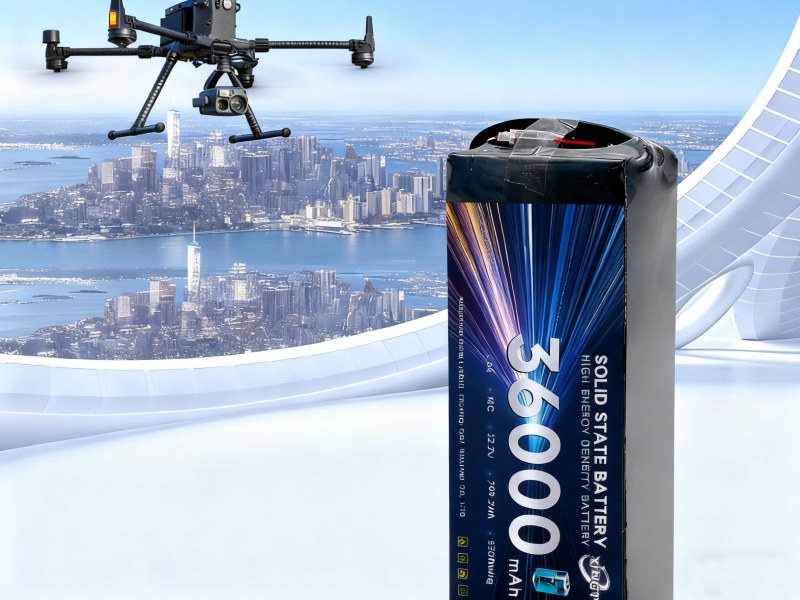
These batteries are widely used in applications such as inspection drones, mapping UAVs, logistics drones, and agricultural drones.
Drone Battery Comparison
| Battery Type | Energy Density | Safety | Cycle Life | UAV Application |
|---|---|---|---|---|
| LiPo | Medium | Low | Short | Consumer drones |
| Lithium-ion | Medium | Medium | Long | Fixed-wing UAV |
| Semi Solid | High | High | Long | Industrial drones |
Semi solid batteries currently provide one of the best performance balances for industrial UAV systems.
Google People Also Ask
What is the best battery for industrial drones?
High energy density lithium-ion or semi solid batteries are commonly used for industrial drone applications.
How long do drone batteries last?
Most drone batteries last between 300 and 500 charge cycles, depending on usage conditions and battery technology.
Why do industrial drones need high energy density batteries?
Higher energy density allows drones to fly longer while carrying heavier payloads.
Conclusion
Selecting the best drone battery requires careful consideration of several factors, including energy density, discharge rate, safety, and battery lifespan.
While LiPo and lithium-ion batteries are still widely used today, semi solid battery technology is quickly becoming the preferred solution for industrial UAV systems.
With improved safety, higher energy density, and longer lifespan, semi solid batteries provide significant advantages for professional drone applications.
Manufacturers such as Xingto Battery are leading the development of advanced industrial UAV battery systems designed to support the next generation of drone technology.