
Introduction
Drone technology has rapidly evolved across industries such as agriculture, infrastructure inspection, logistics, mapping, surveillance, and emergency response. However, one of the biggest limitations affecting UAV performance remains battery technology.
Drone manufacturers and operators frequently ask:
- Is a semi solid state battery better than lithium battery for drones?
- Which battery offers longer UAV flight time?
- What battery technology is safer for industrial drones?
In this guide, we compare semi solid state batteries and traditional lithium batteries, helping UAV manufacturers and operators determine which technology is best for modern drone applications.
Understanding Lithium Batteries for Drones
Lithium batteries are the most widely used power source in the UAV industry today. The two main types include:
- Lithium-ion batteries
- Lithium polymer (LiPo) batteries
Both technologies rely on liquid electrolytes to transfer lithium ions between electrodes.
Advantages of Lithium Batteries
Lithium batteries have remained popular because they offer:
- Mature manufacturing processes
- Lower production cost
- Good energy density compared to older battery technologies
For consumer drones and small UAVs, lithium batteries still perform well.
Limitations of Lithium Batteries in Industrial UAVs
Despite their advantages, lithium batteries also present several challenges.
Safety Risks
Liquid electrolytes are flammable. Under extreme conditions, lithium batteries may experience:
- Thermal runaway
- Overheating
- Fire hazards
This risk increases in high-power industrial drones
Limited Energy Density
Although lithium batteries offer decent performance, they cannot match the energy density improvements achieved by semi solid battery technology.
Lower energy density means:
- shorter flight time
- heavier battery packs
- reduced payload capacity
Faster Degradation
Lithium batteries degrade faster under:
- high discharge rates
- frequent charging cycles
- heavy payload operation
This results in higher long-term operational costs.
What Is a Semi Solid State Battery?
Semi solid state batteries are an advanced form of lithium battery that uses a hybrid electrolyte system combining solid materials with minimal liquid electrolyte.
This structure improves:
- safety performance
- energy density
- thermal stability
Semi solid batteries represent a transitional technology between lithium batteries and fully solid-state batteries.
Key Advantages of Semi Solid Batteries for UAVs
Higher Energy Density
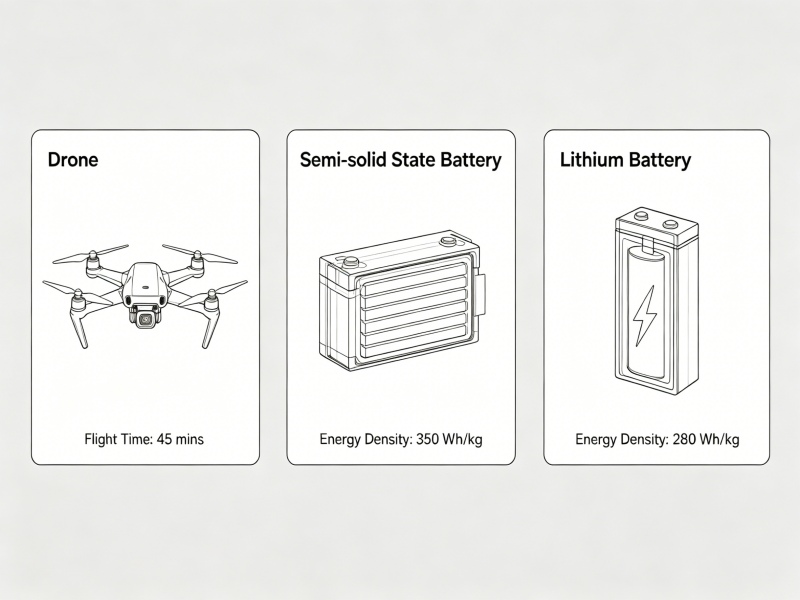
Semi solid batteries store more energy per kilogram compared to traditional lithium batteries.
This directly improves:
- UAV flight time
- mission endurance
- payload capability
For industrial drone operators, longer flight time means higher operational efficiency.
Improved Safety
Semi solid batteries reduce liquid electrolyte content, lowering the risk of combustion.
This makes them safer for:
- heavy lift drones
- industrial inspection drones
- long-endurance UAV missions
Better Temperature Performanc
Industrial drones often operate in extreme environments, including:
- high temperature regions
- cold climates
- high altitude areas
Semi solid batteries maintain more stable performance under these conditions.
Semi Solid Battery Manufacturers
Several manufacturers are developing semi solid battery technology for UAV applications.
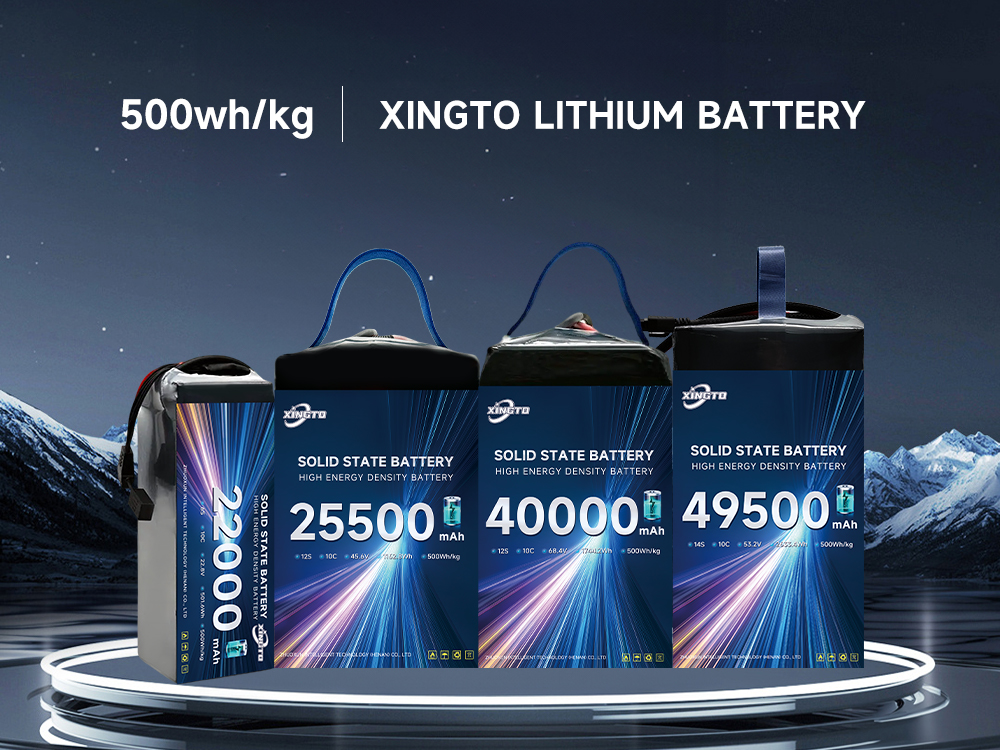
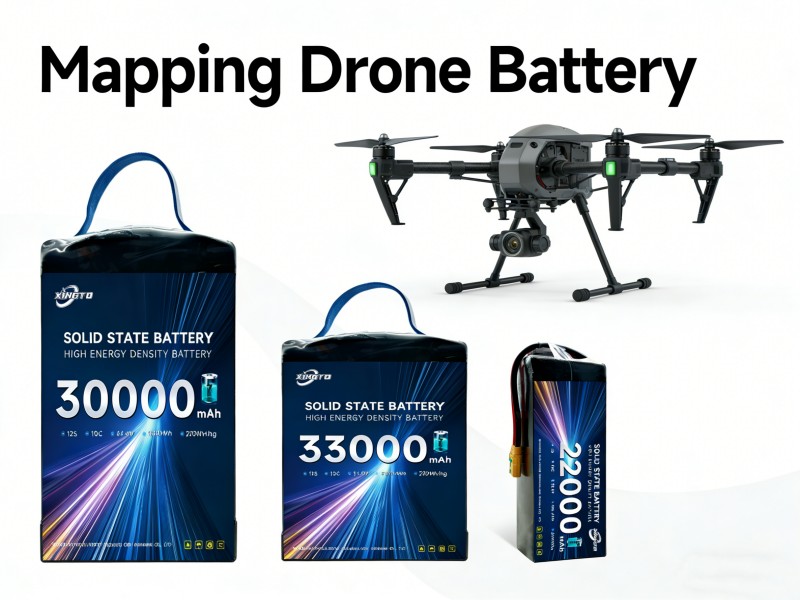
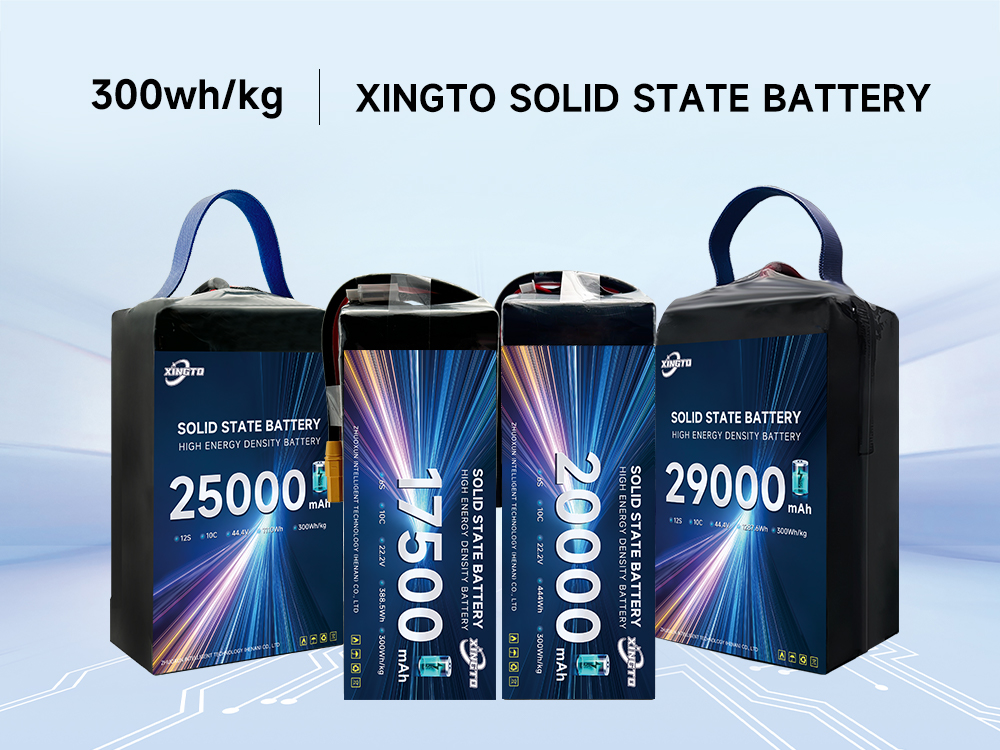
One of the companies focusing on industrial semi solid drone battery systems is Xingto Battery.
Xingto provides:
- high energy density UAV batteries
- semi solid industrial drone batteries
- OEM and ODM customization services
- international certifications including UN38.3, CE, and MSDS
These batteries are designed specifically for long endurance industrial UAV platforms.
Comparison Table
| Feature | Lithium Battery | Semi Solid Battery |
|---|---|---|
| Energy Density | Medium | High |
| Safety | Medium | High |
| Cycle Life | Medium | Longer |
| Cost | Lower | Medium |
| Industrial Suitability | Moderate | Excellent |
Conclusion
While lithium batteries remain widely used in consumer drones, semi solid batteries are becoming the preferred solution for industrial UAV applications.
They provide:
- higher energy density
- improved safety
- longer lifespan
- better environmental adaptability
For industrial drone manufacturers seeking advanced battery technology, semi solid battery systems from companies like Xingto Battery represent a strong next-generation solution.