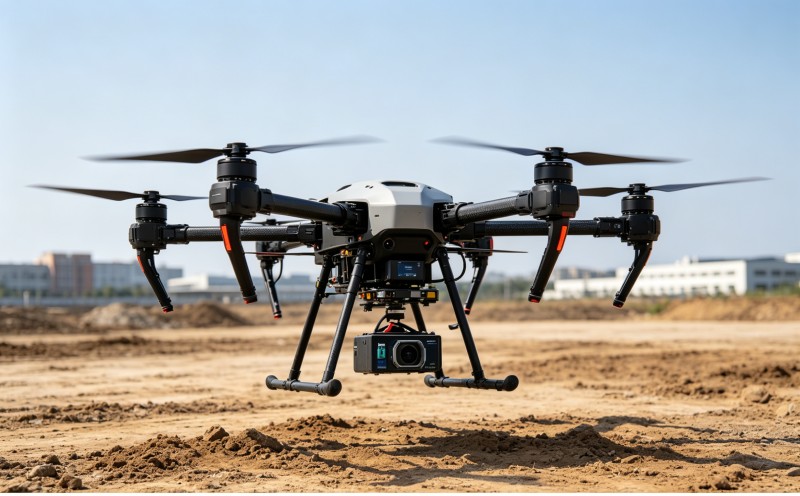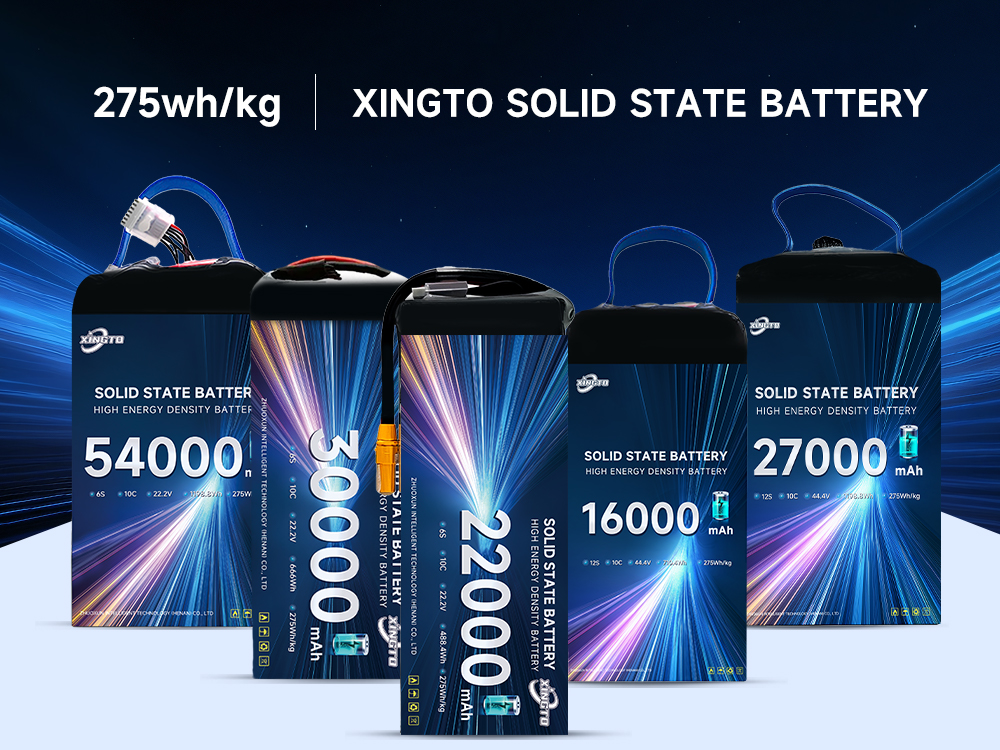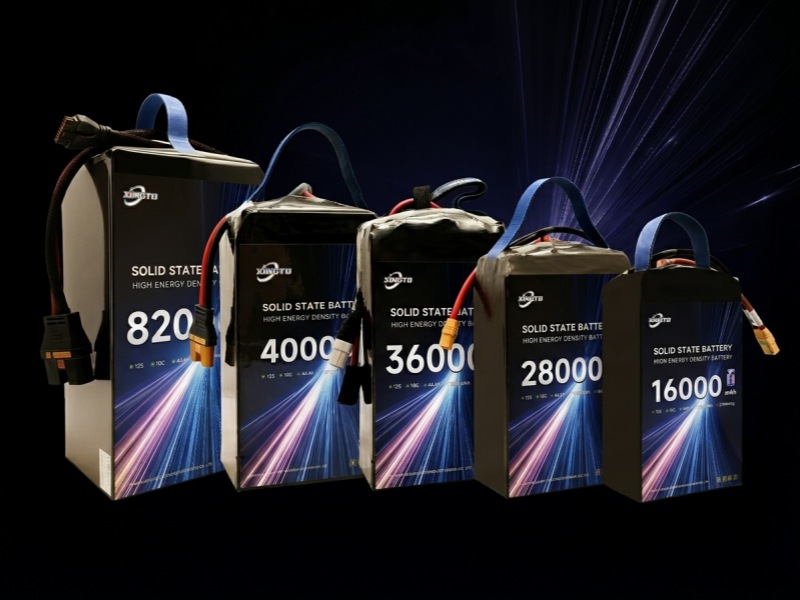

Battery energy density is one of the most important specifications when selecting a battery for an industrial drone. It determines how much usable energy a battery can store relative to its weight or volume.
For UAV manufacturers, operators, and engineers, understanding battery energy density is essential because battery weight directly affects flight time, payload capacity, range, and overall aircraft efficiency.
A battery with higher energy density can store more energy without increasing battery weight proportionally. This is particularly valuable for industrial drones that need longer flight times while carrying cameras, sensors, agricultural equipment, delivery payloads, or other equipment.
Quick Answer: What Is Battery Energy Density?
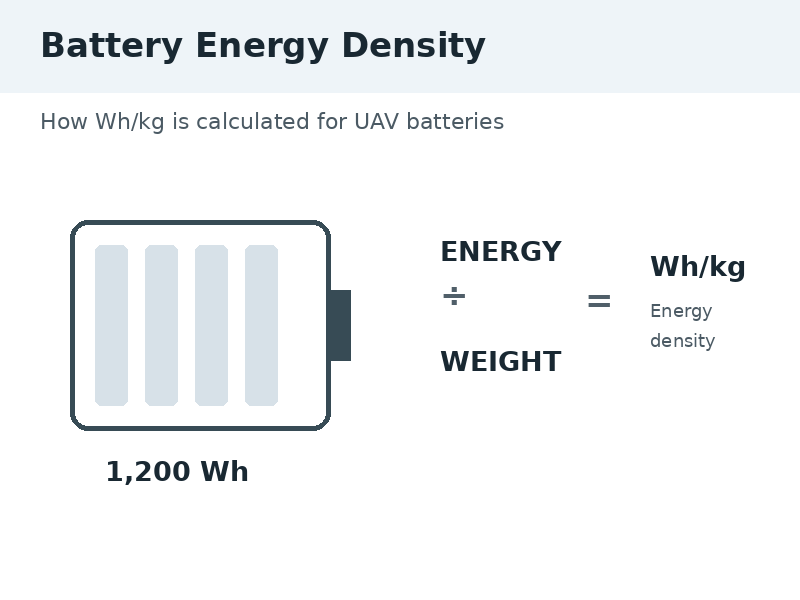
Battery energy density describes the amount of energy stored in a battery relative to its mass or volume.
The two most common measurements are:
Gravimetric energy density: measured in Wh/kg
Volumetric energy density: measured in Wh/L
For drones, gravimetric energy density measured in Wh/kg is often particularly important because reducing battery weight can directly improve endurance and payload capacity.
For example, if a battery stores 1,000 Wh of energy and weighs 5 kg:
Energy density = 1,000 Wh ÷ 5 kg = 200 Wh/kg
Therefore, the battery has a gravimetric energy density of 200 Wh/kg.
Why Is Battery Energy Density Important for Drones?
Battery energy density has a direct relationship with the performance of electric UAVs.
An industrial drone has a limited maximum takeoff weight. That weight must include the frame, motors, propellers, flight controller, communication equipment, sensors, payload, and battery.
When the battery becomes heavier, the motors need to generate more lift. More lift requires more power, which can increase energy consumption.
This creates a difficult engineering balance.
Higher Energy Density Can Increase Flight Time
Suppose two batteries have the same weight but different energy densities.
A higher-energy-density battery can store more energy within the same weight limit.
For a drone operating at a relatively stable power consumption, more available energy can potentially translate into longer flight time.
A simplified calculation is:
Flight time ≈ Battery energy ÷ Average power consumption
For example:
Battery energy = 1,500 Wh
Average power consumption = 3,000 W
Estimated theoretical flight time:
1,500 ÷ 3,000 = 0.5 hours
That equals approximately 30 minutes under idealized conditions.
Actual flight time will be lower or different depending on reserve capacity, payload, flight conditions, motor efficiency, wind, temperature, battery voltage behavior, and other factors.
Higher Energy Density Can Increase Payload Capacity
Industrial UAVs are often designed around a maximum takeoff weight.
If a lighter battery provides the same usable energy, some of the saved weight may be available for additional payload.
For example, a drone that normally carries:
- Battery: 8 kg
- Payload: 5 kg
- Aircraft system: 7 kg
has a total weight of 20 kg.
If battery technology allows the same mission energy to be provided with a 6 kg battery, the aircraft may potentially have additional weight available for payload or other equipment.
This does not mean that every kilogram saved can automatically become one kilogram of payload. Motors, structural components, thermal systems, and flight-control requirements may also need to be adjusted.
How Is Battery Energy Density Calculated?
The basic gravimetric energy density formula is:
Energy Density (Wh/kg) = Battery Energy (Wh) ÷ Battery Weight (kg)
Battery energy can be calculated using voltage and capacity.
Battery Energy (Wh) = Voltage (V) × Capacity (Ah)
Therefore:
Energy Density = Voltage × Capacity ÷ Weight
Example of Energy Density Calculation
Consider a hypothetical UAV battery:
Voltage: 44.4 V
Capacity: 30 Ah
Weight: 6 kg
First calculate energy:
44.4 V × 30 Ah = 1,332 Wh
Then calculate energy density:
1,332 Wh ÷ 6 kg = 222 Wh/kg
The theoretical nominal energy density is therefore approximately:
222 Wh/kg
This calculation provides a useful comparison between battery configurations, but manufacturers and engineers should distinguish between nominal energy and usable energy.
Nominal Energy vs Usable Energy
A battery's nominal energy is generally calculated from nominal voltage and rated capacity.
However, a drone may not use the entire theoretical battery capacity.
Engineers may maintain a safety reserve to protect the battery and ensure stable operation.
Therefore, actual mission energy can be lower than the theoretical value.
For flight planning, usable energy is often more relevant than nominal energy.
Wh/kg vs Wh/L: What Is the Difference?
Battery energy density can be measured by weight or volume.
Gravimetric Energy Density
Wh/kg measures how much energy a battery stores per kilogram.
It is particularly relevant to applications where weight is a major constraint.
For UAVs, weight is usually a critical engineering parameter because every additional kilogram can influence:
- Lift requirements
- Motor power
- Flight endurance
- Payload capacity
- Energy consumption
- Structural design
Volumetric Energy Density
Wh/L measures how much energy a battery stores per unit of volume.
This becomes important when installation space is limited.
For example, a drone may have a fixed battery compartment where the battery must fit within strict dimensions.
In this situation, a battery with excellent Wh/kg but insufficient Wh/L may still be unsuitable.
What Factors Affect Battery Energy Density?
Battery energy density depends on much more than cell chemistry.
Cell Chemistry
Different lithium battery chemistries have different energy-density characteristics.
Battery chemistry influences:
- Cell voltage
- Specific capacity
- Cycle behavior
- Thermal characteristics
- Power capability
- Safety characteristics
Cell Design
Cell structure and materials also affect energy density.
Electrode materials, separator technology, current collectors, electrolyte systems, and manufacturing processes can all influence the amount of energy stored within a given mass and volume.
Battery Pack Design
The energy density of a battery cell is not necessarily the same as the energy density of the complete battery pack.
A complete UAV battery may include:
- Cells
- Busbars
- Wires
- Connectors
- BMS
- Housing
- Insulation
- Protection components
- Thermal management components
Therefore, pack-level Wh/kg can be significantly different from cell-level Wh/kg.
For UAV applications, pack-level energy density is usually the more useful specification.
Why Pack-Level Energy Density Matters for Industrial UAVs
A battery manufacturer may advertise a very high cell energy density.
However, the actual UAV battery system may have lower energy density once all components are included.
When comparing suppliers, buyers should ask whether the quoted energy density refers to:
- Cell level
- Module level
- Complete battery pack level
This distinction can prevent misleading comparisons.
Cell Energy Density vs Pack Energy Density
For example:
Cell energy density: 350 Wh/kg
A finished UAV battery may have a lower system-level value because additional components contribute weight without storing energy.
Therefore, industrial drone manufacturers should evaluate the complete battery rather than relying only on the cell specification.
What Is a High Energy Density Drone Battery?
A high energy density drone battery is designed to provide more energy within a limited battery weight and volume.
For industrial UAVs, high energy density is especially valuable in:
- Long-endurance drones
- Heavy-lift UAVs
- Agricultural drones
- Mapping drones
- Inspection drones
- Delivery UAVs
- Firefighting drones
- Surveillance platforms
However, energy density should not be evaluated independently.
A drone battery also needs appropriate power output, thermal performance, reliability, cycle life, charging capability, and mechanical compatibility.
Semi-Solid-State Batteries and Energy Density
Semi-solid-state battery technology is attracting attention in industrial UAV applications because of its potential to increase energy density while maintaining practical manufacturing and system characteristics.
For drone manufacturers, the potential benefit is straightforward:
More energy with less battery weight can create additional design flexibility.
This can support longer endurance, greater payload potential, or smaller battery configurations depending on the aircraft design.
However, actual battery performance depends on the specific cell, pack design, operating conditions, and electrical configuration.
How Should UAV Manufacturers Compare Battery Energy Density?
When evaluating suppliers, do not compare only the largest Wh/kg number shown on a product page.
Instead, request complete technical information.
Check These Specifications
Ask the supplier for:
- Nominal voltage
- Maximum voltage
- Rated capacity
- Battery weight
- Dimensions
- Continuous discharge current
- Peak discharge current
- Recommended charge current
- Operating temperature
- Cycle-life data
- BMS configuration
- Communication protocol
- Connector specification
- Safety and transportation documentation
Verify the Actual Battery Weight
A useful calculation is:
Actual Pack Energy Density = Nominal Pack Energy ÷ Actual Pack Weight
This gives you a more meaningful comparison between complete battery systems.
Does Higher Energy Density Always Mean a Better Drone Battery?
No.
Higher energy density is valuable, but it is only one part of battery performance.
A battery optimized exclusively for energy density may not be appropriate for a drone requiring extremely high instantaneous power.
For example, a heavy-lift UAV may need a combination of:
- High energy density
- High discharge capability
- Low internal resistance
- Good thermal stability
- Reliable voltage output
Therefore, the best battery is not necessarily the battery with the highest advertised Wh/kg.
It is the battery that provides the best balance for the aircraft's mission requirements.
How Xingto Battery Approaches High Energy Density UAV Batteries
For industrial UAV manufacturers, Xingto Battery focuses on battery solutions designed around the practical requirements of drone platforms rather than energy density alone.
Its industrial semi-solid-state UAV battery solutions can be configured around different aircraft requirements, including voltage, capacity, discharge performance, dimensions, connectors, and battery-management requirements.
For OEM and ODM projects, the battery specification should be matched to the drone's motors, ESCs, flight controller, payload, mission duration, and available battery compartment.
If you are developing an industrial UAV and need help evaluating the appropriate battery energy density, a manufacturer can work backward from your aircraft's power consumption and weight limitations to determine a suitable battery configuration.
Frequently Asked Questions About Battery Energy Density
What is battery energy density?
Battery energy density is the amount of energy stored by a battery relative to its weight or volume. It is commonly expressed as Wh/kg or Wh/L.
How do you calculate Wh/kg?
Divide the battery's energy in watt-hours by its weight in kilograms.
Wh/kg = Wh ÷ kg
Why is Wh/kg important for drones?
Higher Wh/kg can allow a drone to carry more energy without increasing battery weight proportionally, potentially improving endurance or payload flexibility.
Is cell energy density the same as battery pack energy density?
No. A complete battery pack contains additional components such as wiring, connectors, BMS, housing, and protection structures. Pack-level energy density is therefore usually lower than cell-level energy density.
Is higher energy density always better?
No. UAV batteries must also meet requirements for power output, thermal performance, voltage, safety, cycle life, charging, dimensions, and system compatibility.
What energy density is best for an industrial drone?
There is no single number that works for every UAV. The ideal energy density depends on the drone's weight, power consumption, payload, mission duration, battery compartment, and required discharge performance.
Final Takeaway
Battery energy density is a key specification for modern UAV battery design.
The basic calculation is simple:
Energy Density (Wh/kg) = Battery Energy (Wh) ÷ Battery Weight (kg)
But selecting the right battery requires more than comparing Wh/kg numbers.
Industrial UAV manufacturers should evaluate the complete battery system, including energy, power, weight, dimensions, thermal performance, BMS, charging requirements, and aircraft compatibility.
As industrial drones move toward longer endurance and higher payload requirements, high-energy-density technologies such as advanced lithium and semi-solid-state batteries are becoming increasingly important.
CTA
Developing an industrial UAV or looking for a customized high-energy-density drone battery?
Contact Xingto Battery to discuss your required voltage, capacity, discharge rate, dimensions, connector, and application. Our team can help you evaluate a battery configuration based on your UAV's actual power and endurance requirements.